
What Is Soy Wax? What It Is Made Of and How It Becomes a Candle
Soy wax is a vegetable wax made from soybean oil. The oil is pressed from soybeans, refined, and then hydrogenated until it is solid at room temperature, which turns a liquid oil into a soft, opaque wax that can hold a wick. This guide explains what soy wax is made of, how it is made step by step, its melting point, what a soy wax blend is, and how we use soy wax in our own candles.
What is soy wax?
Soy wax is a wax made from the oil of soybeans. It is soft, off-white and opaque, and it is used mostly for candles.
Every candle wax starts somewhere. Beeswax is made by honeybees, and paraffin is refined from crude oil (we explain that process in What Is Paraffin Wax Made Of?). Soy wax begins as a plant oil. Candle makers usually buy it as small flakes or pellets, which they melt, pour around a wick and leave to set.
What is soy wax made of?
Soy wax is made of hydrogenated soybean oil. Chemically it consists mainly of triglycerides, the fats that plant oils are built from, with a high share of stearic acid.
Soybean oil is liquid at room temperature, like most vegetable oils, because many of its fatty acids are unsaturated. Hydrogenation turns a large part of them into saturated fatty acids, mostly stearic acid. Saturated fats are firmer, so the oil becomes a solid wax. That single change is the difference between a bottle of soybean oil and a block of soy wax.
For a wider look at what goes into a candle, from the wax to the wick, see What Are Candles Made Of?
How is soy wax made?
In five steps: the beans are cleaned and dehulled, rolled into flakes, the oil is extracted, refined, and then hydrogenated until it is solid.
- Cleaning and dehulling. After the harvest, the soybeans are cleaned, cracked and their hulls removed.
- Flaking. The cracked beans are rolled into thin flakes, which makes the oil easier to release.
- Extracting the oil. The oil is separated from the flakes. What remains, the soybean meal, is commonly used as animal feed.
- Refining. The crude oil is cleaned to remove impurities, so it becomes clear and mild.
- Hydrogenating. Hydrogen is added to the oil under heat and pressure, with the help of a catalyst, until the oil turns solid at room temperature. The finished wax is then formed into flakes or pellets.
Is soy wax hydrogenated?
Yes. Hydrogenation is what makes soy wax a wax. Without it, soybean oil would stay liquid and could not be shaped into a candle.
The process is the same basic one used to make some vegetable fats firm. How far the oil is hydrogenated, and what it is blended with, decides how soft or firm a particular soy wax is.
What is the melting point of soy wax?
Most soy candle waxes start to melt at around 49 °C, and blends made for firmer candles melt higher.
Beeswax melts at around 62 to 64 °C, so soy wax is the softer of the two. Different soy waxes are made for different candles: softer ones for jars and containers, firmer ones for candles that stand on their own. We wrote more about beeswax in What Is Beeswax?
What is soy wax used for?
Mainly for candles: container candles, pillar candles and tapers, as well as wax melts.
Soy wax takes a wick well, sets with a smooth surface and is easy to pour, which is why it has become one of the most common candle waxes. Outside candles it appears in smaller amounts in things such as crayons and some cosmetics.
What is a soy wax blend?
A soy wax blend is soy wax mixed with another wax to change how it holds its shape, how it looks and how it burns.
Soy is blended with many things, including beeswax, coconut wax and other plant waxes. A blend can also include paraffin, so the words "soy blend" on their own do not tell you everything. If you prefer a candle without paraffin, look for a label that names every wax it contains. Our guide to paraffin-free candles explains what to look for.
How do you recognise a soy wax candle?
By the label. A soy candle names soy wax in its ingredients, and a blend names each wax in it.
- "100% soy wax" or "soy wax": soy is the only wax.
- "Soy blend": soy plus at least one other wax; the label should say which.
- "Beeswax and soy": a blend of the two, ideally with the ratio stated.
To the eye, soy wax is opaque with a soft, matte surface. Looks alone are not proof, though; the ingredient list is.
How we use soy wax
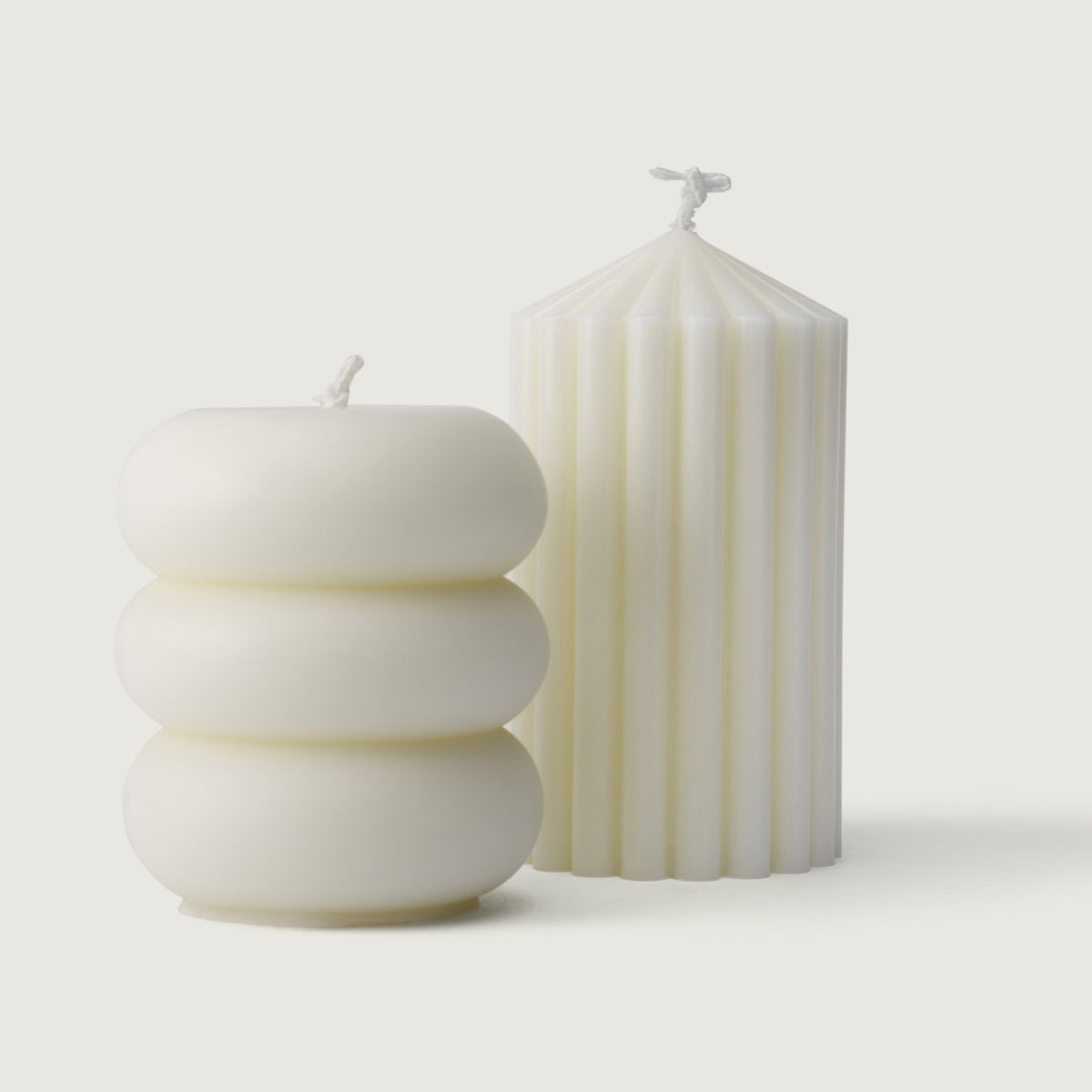
In two ways: blended 50/50 with beeswax in our pillar candles, and on its own in our Four Tapers.
Neither wax is simply better than the other; each brings something. Beeswax is firm and melts at a higher temperature, soy wax is softer and pours smoothly. Together they give a pillar that keeps its sculptural form. We explain that choice in Beeswax and Soy Candles: Why We Blend the Two.
LLIOR is a Dutch candle brand that makes unscented candles from a 50/50 blend of beeswax and soy wax, with a cotton wick and no paraffin, added fragrance or dye.
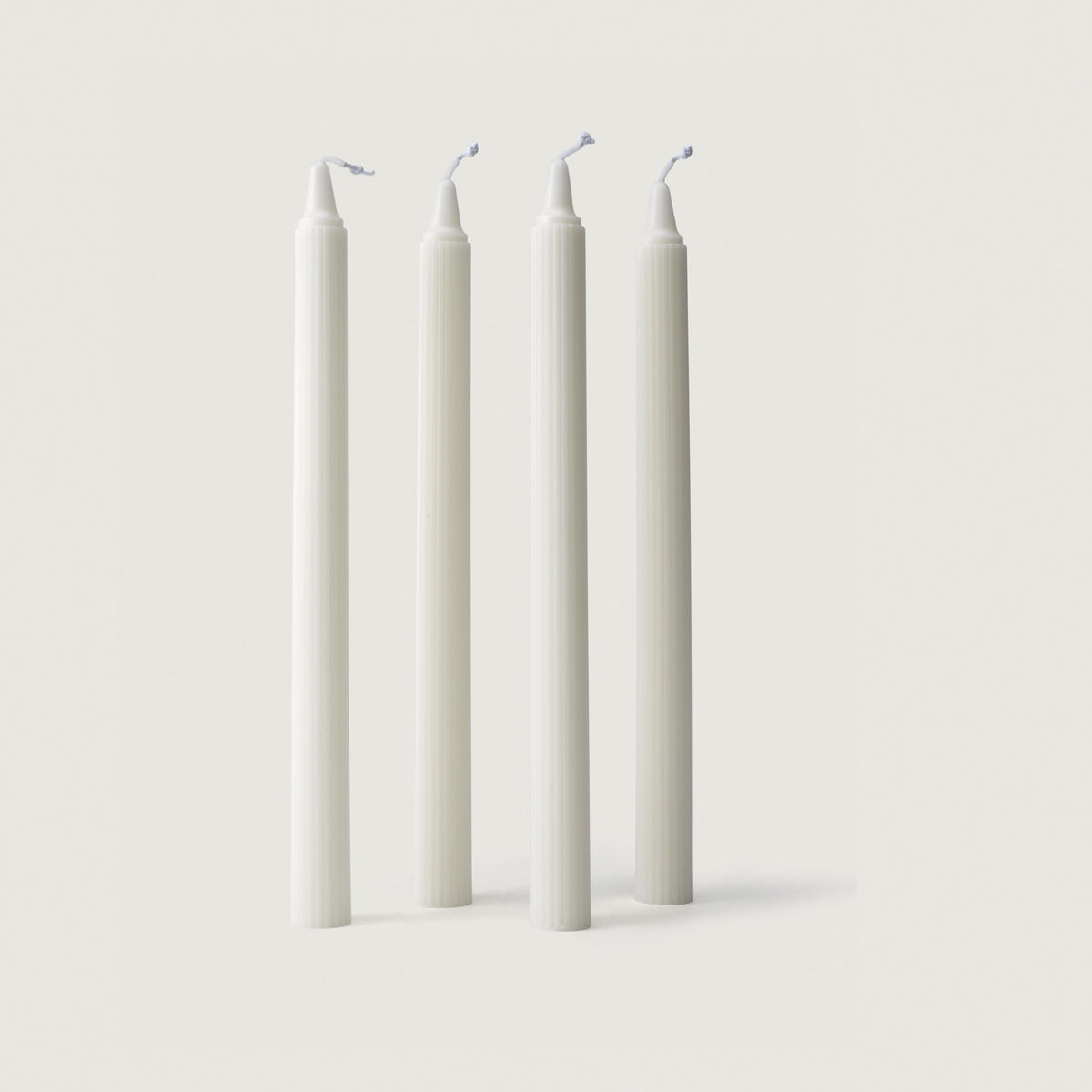
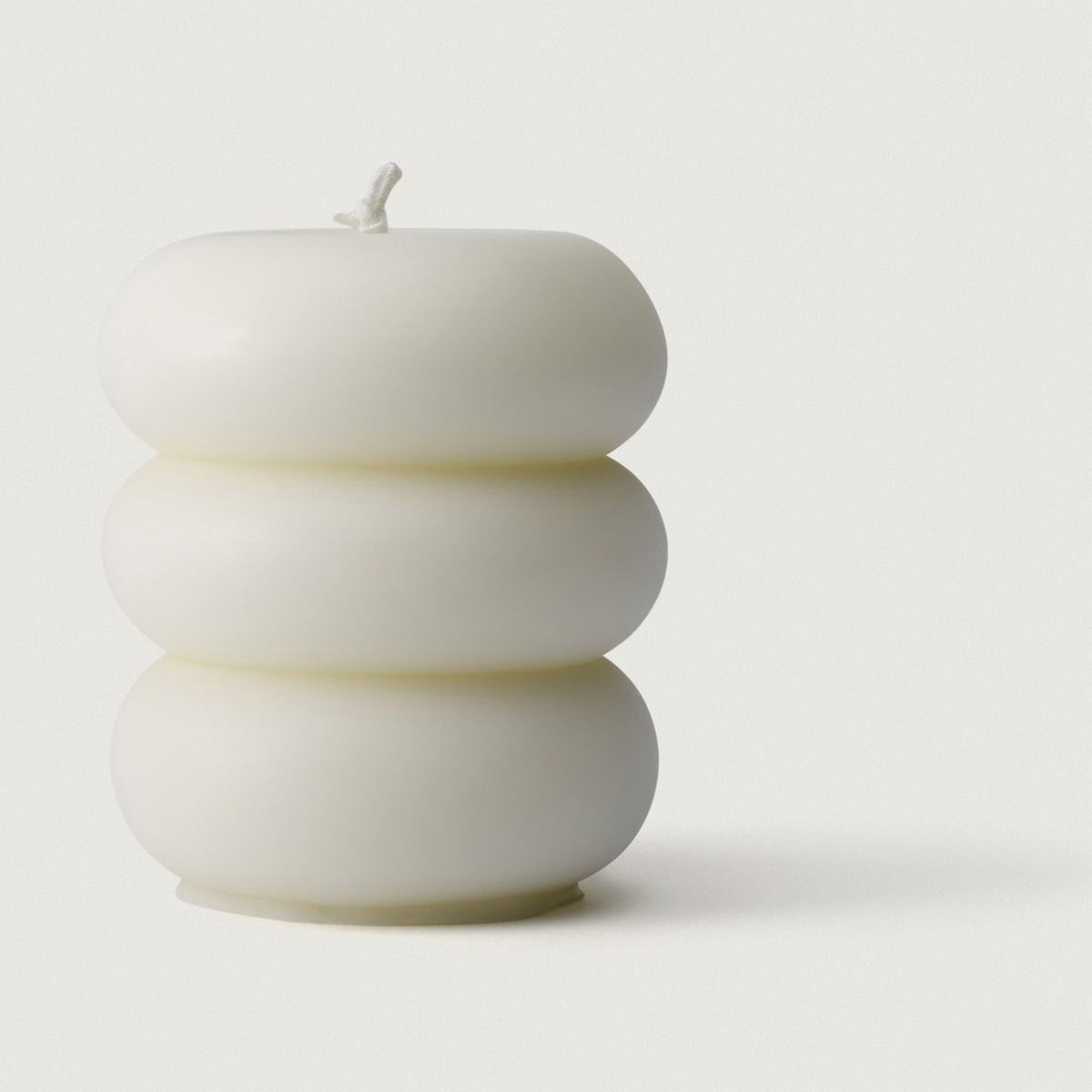
Our Four Tapers are made from soy wax and stand 27 cm tall. Our Signature Candle is 20 cm tall, 8 cm across and weighs 800 g, with a measured burn time of 180 to 200 hours, and the Pillar Candle Set brings two sculptural pillars together. Whichever you burn, trim the wick to 0.5 to 1 cm before each use and burn for up to 4 hours at a time; our guide on how to trim a candle wick shows how.
Frequently asked questions
Is soy wax made from soybeans?
Yes. Soy wax is made from the oil pressed from soybeans, which is refined and hydrogenated until it is solid at room temperature.
Is soy wax the same as soybean oil?
Not quite. Soy wax is soybean oil after hydrogenation: the same starting material, but changed so that it is solid instead of liquid.
What is the difference between soy wax and beeswax?
Soy wax is made from a plant oil; beeswax is made by honeybees. Beeswax is firmer and melts at around 62 to 64 °C, soy wax from around 49 °C. We blend the two 50/50 in our pillar candles.
Does soy wax contain paraffin?
Soy wax itself does not. Some soy blends do include paraffin, so check that the label names every wax. LLIOR candles contain no paraffin.
Are LLIOR candles made of soy wax?
Partly. Our pillar candles are made from a 50/50 blend of beeswax and soy wax, and our Four Tapers from soy wax, all with a cotton wick and no paraffin, added fragrance or dye.

Read more
If strong smells bother you, the simplest candle is one with nothing added. What fragrance-free really means, what to check on the label, what an unscented candle smells like, and how to enjoy cand...
The best candles for a bedroom are quiet ones: a steady pillar, sized for a nightstand or dresser, without added fragrance. Where to place them, how long to burn them before bed, and how to put the...