
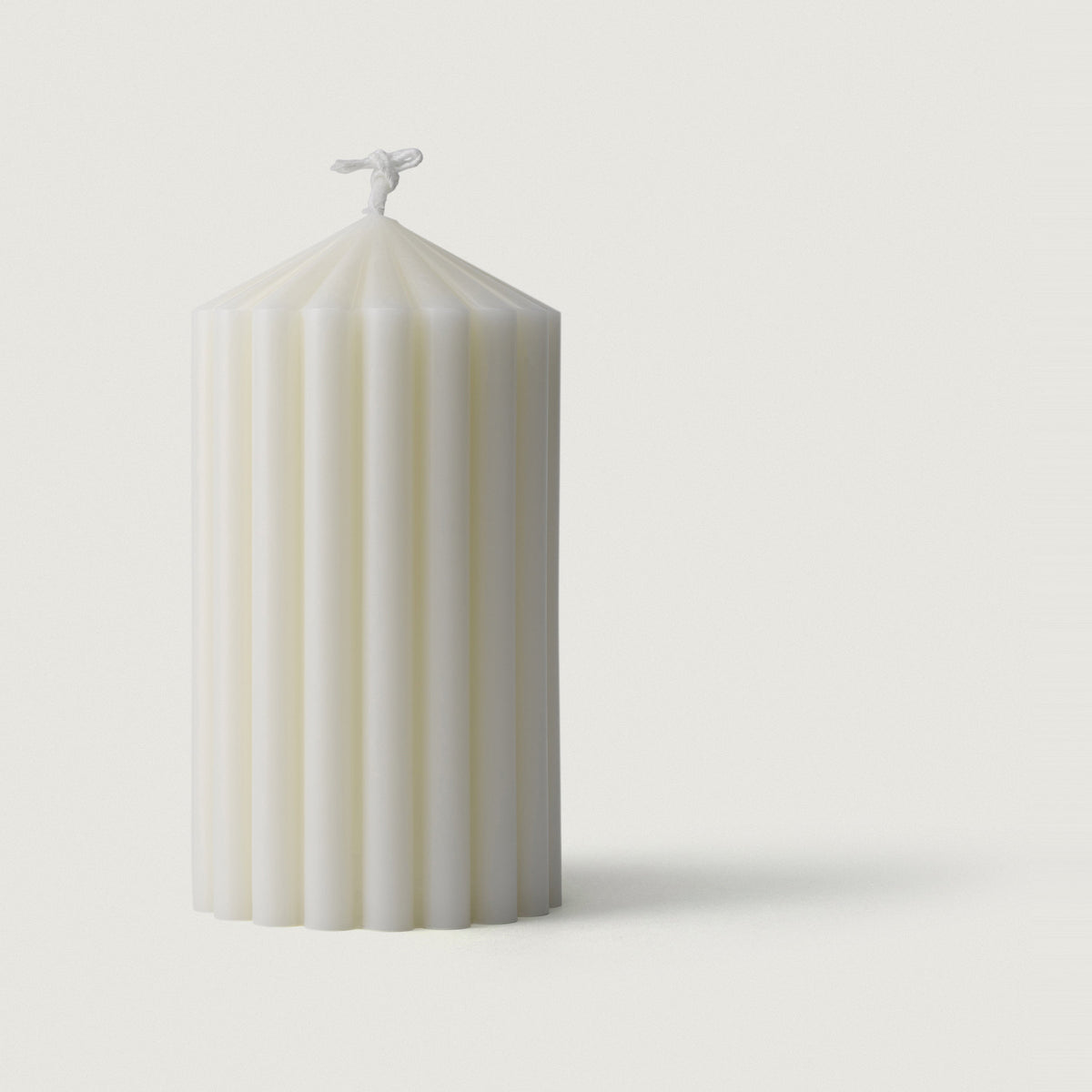
Beeswax and Soy Candles: Why We Blend the Two
Beeswax and soy candles are made from two waxes with very different origins: one is produced by honeybees, the other is made from soybean oil. On their own, both are good candle waxes. Blended, they give a freestanding candle the firmness of beeswax and the smooth, even surface of soy. This is how the two waxes differ, why we pour every pillar from a blend of both, and where paraffin fits into the picture.
LLIOR is a Dutch candle brand that makes unscented candles from a 50/50 blend of beeswax and soy wax, with a cotton wick and no paraffin, added fragrance or dye.
What are beeswax and soy candles?
A beeswax and soy candle is a candle whose wax is a blend of beeswax and soy wax, rather than one wax alone. The ratio varies by maker; ours is exactly half and half.
Blending waxes is an old and ordinary practice in candle making. Each wax has its own melting point, hardness and texture, and combining them lets a maker choose the qualities a particular candle needs. For a pillar that stands without a jar, that choice matters more than for a candle poured into a glass.
What is the difference between beeswax and soy wax?
The short answer: beeswax comes from a hive and is firm, with a melting point of around 62 to 64 °C; soy wax comes from a plant and is softer, typically melting somewhere between about 50 and 57 °C, depending on the grade.
Beeswax: made by bees
Beeswax is secreted by young worker honeybees from small glands on the underside of their abdomen. The bees shape it into the hexagonal cells of the comb, where they store honey and raise their brood. Making wax takes a great deal of energy: estimates usually put it at six to eight kilos of honey for every kilo of wax. After the honey harvest, beekeepers melt down the cappings and old comb, then filter the wax until it is clear of debris.
Beeswax is dense and firm at room temperature. Its natural colour ranges from pale yellow to deep gold, depending on the flowers the bees visited. One small quirk: over time a fine white film can appear on the surface, known as bloom. It is a natural reaction of beeswax to changes in temperature, and it does not affect the burn. A soft cloth or a moment of warmth from your hands lifts it.
Soy wax: made from soybeans
Soy wax starts as soybean oil, pressed from the beans. Because the oil is liquid at room temperature, it is hydrogenated: a process that makes the fats solid, so the oil becomes a wax. The result is a creamy, pale wax that is softer than beeswax and pours with a smooth, even finish.
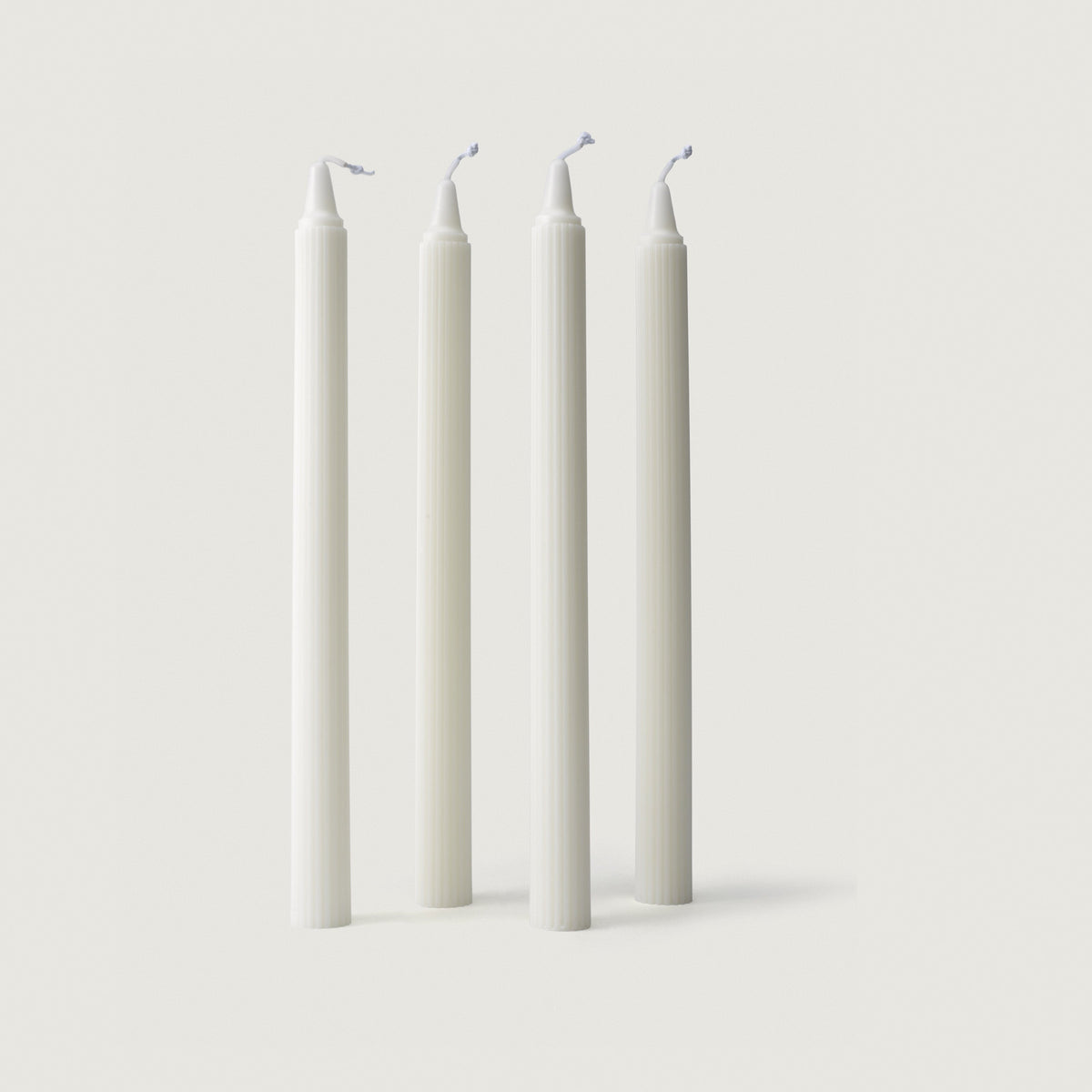
Soy wax was developed for candles in the 1990s and is now one of the most common plant-based candle waxes. Our Four Tapers, 27 cm each, are poured in soy.
| Beeswax | Soy wax | |
|---|---|---|
| Origin | Made by honeybees | Made from soybean oil |
| Melting point | About 62-64 °C | About 50-57 °C, by grade |
| Texture | Firm, dense | Softer, creamy |
| Natural colour | Pale yellow to gold | Off-white |
| Typical quirk | White bloom on the surface | Smooth, matte finish |
Is beeswax better than soy wax?
Neither is simply better. They behave differently, and what a candle needs depends on its form. That is precisely why we use both.
Questions like this usually assume one wax must win. In practice, a candle maker is not choosing a winner but a set of qualities: how firm the candle stands, how evenly the wax melts around the wick, how the surface looks in daylight. Beeswax and soy answer those questions in different ways, and a blend lets each contribute what it does well.
Why blend beeswax and soy wax?
We blend them because a freestanding pillar needs two things at once: the structure to hold its shape for many hours of burning, and a calm, even surface that suits a candle meant to be looked at as much as lit.
- Beeswax gives structure. Its firmness and higher melting point help a pillar keep its edges, ribs and pressed details as it burns down.
- Soy gives a smooth finish. It softens the blend just enough for an even, quiet surface and a steady melt around the wick.
- Half and half keeps it simple. A 50/50 ratio is easy to repeat batch after batch, so every candle is poured from the same blend.
The Signature Candle shows what that blend makes possible: 20 cm tall, 8 cm across, 800 g of wax and a measured burn time of 180 to 200 hours, with the monogram still legible in the wax.
Where does paraffin fit in?
It doesn't, in our candles. Paraffin is the third common candle wax, and it is made from crude oil, as a by-product of refining lubricating oils.
Paraffin is inexpensive and widely used, and there is nothing secret about it. We simply chose to work with a wax from a hive and a wax from a plant instead. If you want to know more about where paraffin comes from, we wrote about it in What Is Paraffin Wax Made Of?, and about reading a label in Paraffin-Free Candles.
Do beeswax and soy candles need different care?
No. A blended candle is cared for like any good pillar: trim the wick to 0.5 to 1 cm before each burn, give the first burn at least two hours, and after that burn for up to four hours at a time.
The first burn lets the wax melt evenly across the top, which shapes every burn after it. Keep the candle out of draughts and on a stable, heat-resistant surface, and put it out with a snuffer to keep the wick straight and centred. Our guide on how to trim a candle wick covers the details.
Why we chose beeswax and soy
A candle is a small object made of very few things: wax and a wick. With so little in it, each material is a decision. We chose two waxes with an origin you can picture, a hive and a field, and left out everything else: no paraffin, no added fragrance, no dye. What remains is the wax, the cotton wick and the flame, which is the candle we wanted to make. You will find the full collection here.
Frequently asked questions
Are LLIOR candles 100% beeswax?
No. Our pillars are a 50/50 blend of beeswax and soy wax, with a cotton wick. The Four Tapers are poured in soy wax.
What is the white film on my beeswax candle?
That is bloom, a natural reaction of beeswax to temperature changes. It does not affect the burn and can be wiped away with a soft cloth.
Is there paraffin in a beeswax and soy blend?
Not in ours. Some blends on the market do include paraffin, so it is worth reading the label. Ours contains only beeswax and soy wax.
How long does a beeswax and soy candle burn?
That depends mostly on size and wick. Our Signature Candle burns for 180 to 200 hours, Pillar Candle I for 70 to 90 hours and Pillar Candle II for 60 to 70 hours. More in How Long Does a Candle Burn?
Do beeswax and soy candles have a scent?
Ours have no added fragrance. They are made to give light, not scent. Read more in Unscented Candles.

Read more

How to put out a candle properly: why a snuffer is the calmest way, how to put a candle out without blowing it, and what to do with the wick afterwards so a natural wax pillar keeps burning evenly.
The best candles for a dinner table give light without adding a scent to the meal. How tall they should be, how many to use, whether to choose tapers or pillars, and how to keep them burning beauti...