
Parts of a Candle: A Short Glossary, From Wick to Flame
The parts of a candle are simple to name: wax, wick, flame, and the small pool of melted wax between them. Yet each part has a job, and once you know what that job is, it becomes much easier to understand why a candle burns well, why it sometimes doesn't, and what to do about it. This short glossary walks through every part of a candle, from the base to the tip of the flame, with the names you will come across on labels and care cards.
What are the parts of a candle?
A candle has three essential parts: the wax (the fuel), the wick (which carries the fuel to the flame) and the flame itself. Around them you will find the melt pool, the wick tip and, depending on the candle, a wick tab, a jar or a shaped body.
Everything else, from ribs and flutes to the base of a taper, is about form: how the candle stands, how it holds the light, and how it fits a holder or a table. Here are the parts one by one.
The wax
The wax is the fuel of the candle. It is the part that actually burns, not the wick.
Solid wax near the flame melts, the wick draws that liquid up, and the heat turns it into vapour. It is the vapour that burns. Candle wax can be made from beeswax, plant waxes such as soy, or paraffin, which comes from petroleum. We explain the differences in What Are Candles Made Of?
The wick
The wick is the string-like core of the candle. Its job is to carry melted wax up to the flame.
If you have ever wondered what the string part of a candle is called, this is it. Most wicks are braided cotton, sometimes with a thin coating of wax so they light easily. The wick works like a lamp wick: liquid wax climbs through the fibres by capillary action, the same way water climbs up a paper towel. For the full explanation, see How Does a Candle Wick Work?, and for materials, What Are Candle Wicks Made Of?
The wick tip
The wick tip is the part of a candle that you light. It is the top few millimetres of wick that stand free above the wax.
Before every burn, the free part of the wick should be 0.5 to 1 cm long. Many braided cotton wicks curl slightly as they burn, so the tip bends into the hottest part of the flame and burns away gradually. Our guide How to Trim a Candle Wick shows how to keep it at the right length.
The carbon cap
The black part at the top of a used wick is called a carbon cap, sometimes a "mushroom" because of its shape.
It forms when the wick has grown too long or the candle has burned for a long time. A carbon cap makes the flame larger and less steady, so trim it off once the candle has cooled. It is one of the most common reasons for a restless flame, as we describe in Why Is My Candle Flickering?
The melt pool
The melt pool is the layer of liquid wax around the wick while the candle burns. It is the flame's reservoir of fuel.
A calm, even melt pool means the flame is getting a steady supply of wax. Keep it clean: a spent match or a piece of trimmed wick in the pool can disturb the flame. The first time you light a candle, give the pool time to spread; our guide on burning a candle for the first time explains why.
The wick tab
The wick tab is a small metal disc at the bottom of the wick, used mainly in candles poured into a jar or tin.
It holds the wick upright and in the centre while the wax sets. Many pillar candles and tapers do not need one, because the wick runs through the body of the candle and is held in place by the wax around it.
The body, base and shoulder
The body is the shape of the candle itself. In a pillar candle it stands free, without a jar; the base is the flat underside it stands on.
As a pillar burns, the outer edge of wax around the melt pool, sometimes called the shoulder or wall, holds the liquid wax in place. A pillar should always stand on a heat-resistant plate or holder.
Ribs and flutes
Ribs and flutes are the vertical grooves pressed into the side of some candles. They are part of the design, and change how the candle catches light.
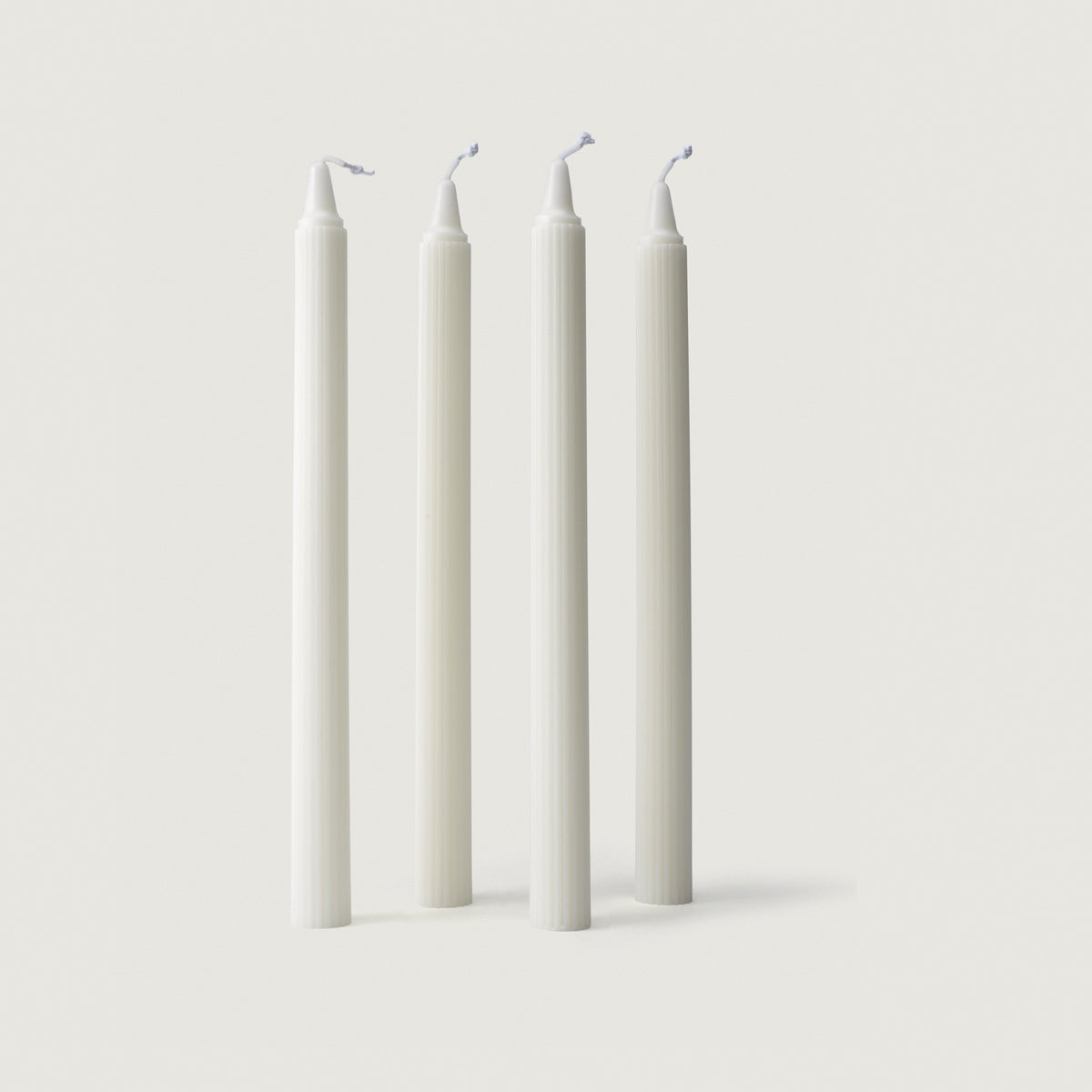
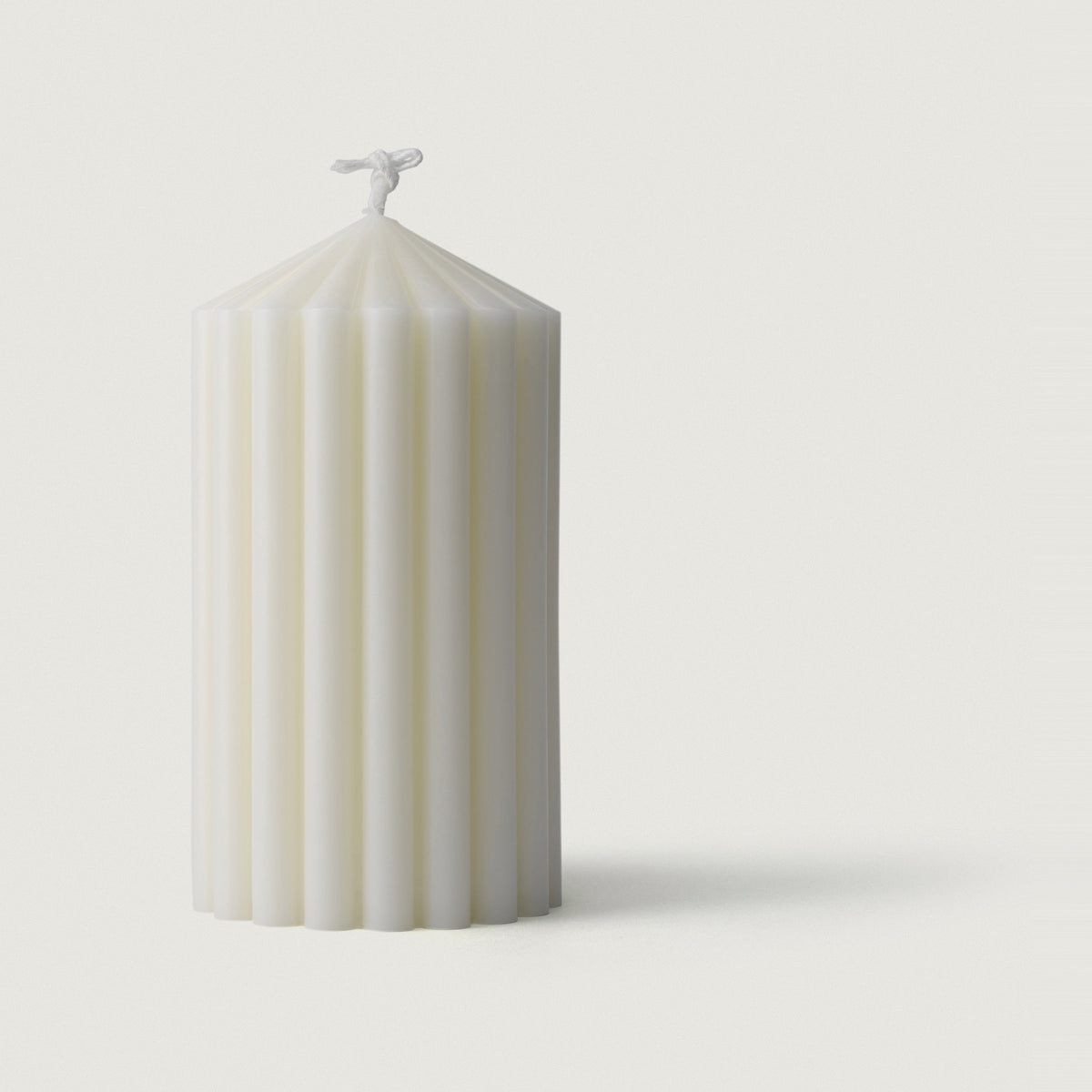
Our Four Tapers are ribbed along their 27 cm length, and Pillar Candle II has fluted sides. In candlelight, each groove holds a narrow line of shadow, which gives the wax depth even when the candle is not lit.
The foot of a taper
The foot is the narrower bottom end of a taper candle, shaped to fit into a candle holder.
A taper should stand firmly and straight in its holder; a leaning taper burns unevenly. More on choosing and using them in Taper Candles.
What are the parts of a candle flame?
A candle flame has three main zones: a dark inner zone around the wick, a bright yellow middle zone, and a faint outer zone, which is the hottest part of the flame. At the very base there is often a small blue area.
- Inner zone. The darker area right around the wick, made up of wax vapour that has not yet started to burn. It is the least hot part of the flame.
- Middle zone. The bright yellow part that gives a candle its light. Tiny particles of carbon are heated until they glow, then burn away as they rise.
- Outer zone. A thin, almost invisible edge where the vapour meets the most oxygen and burns completely. This is the hottest part; figures of around 1,400 °C are usually given.
- Blue base. At the bottom of the flame, air reaches the vapour first, and it burns with a small blue glow.
The warm colour of candlelight sits at around 1,800 to 1,900 kelvin, warmer than a typical warm-white bulb at about 2,700 K.
Which part of a candle burns?
The wax burns, as vapour. The wick only carries it to the flame and burns away slowly at its tip.
This is why the length of the wick matters so much. A wick of 0.5 to 1 cm delivers just enough wax for a calm flame. A longer wick delivers too much, and the flame grows tall and restless. Burn a candle for up to 4 hours at a time, then let it cool and trim the wick before you light it again.
What goes into our candles
Ours have no more parts than they need: wax and a cotton wick.
LLIOR is a Dutch candle brand that makes unscented candles from a 50/50 blend of beeswax and soy wax, with a cotton wick and no paraffin, added fragrance or dye. Our pillars stand free, without a jar, so the wick is easy to reach and trim. The Signature Candle is 20 cm tall, 8 cm across and weighs 800 g, with a measured burn time of 180 to 200 hours. You can read about the materials on The Standard.
Frequently asked questions
What is the string in a candle called?
The wick. It carries melted wax up to the flame, and is usually made of braided cotton.
What is the black part of a candle wick called?
A carbon cap, sometimes called a mushroom. Trim it off once the candle has cooled, leaving 0.5 to 1 cm of wick.
What part of a candle do you light?
The tip of the wick: the part that stands free above the wax.
Which part of a candle flame is the hottest?
The faint outer zone of the flame, where the wax vapour meets the most oxygen.
What is the melted wax around the wick called?
The melt pool. It is the flame's supply of fuel while the candle burns.

Read more
Why is my candle flickering? Usually a draught or a wick that is too long. The seven most common causes, why a candle flickers with no wind, why a flame burns too high or too small, and how to get ...
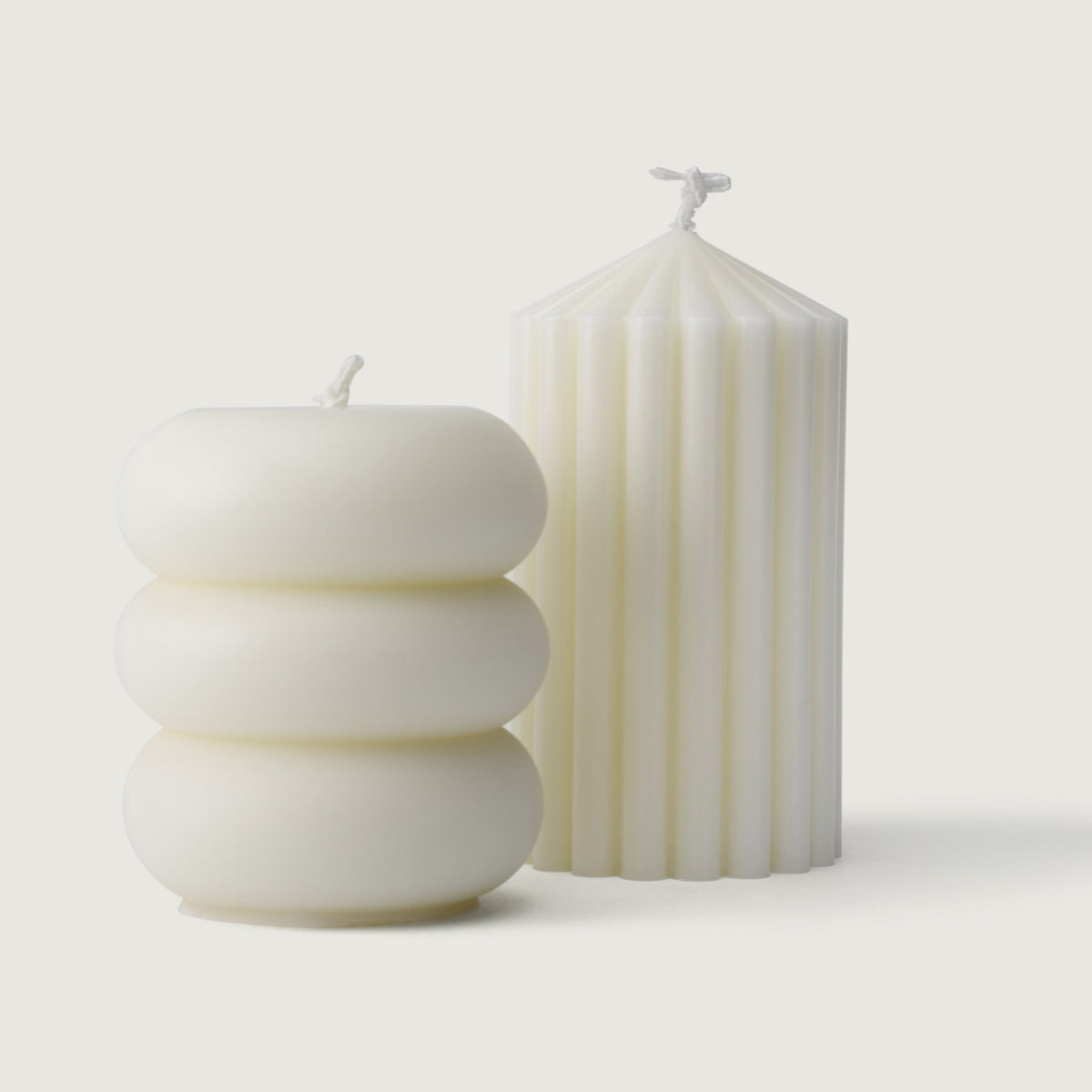
What a pillar candle is, which sizes are common, why the wax has to hold its own form, and how to burn pillar candles evenly and without spillage: trim the wick to 0.5 to 1 cm, use a plate, and bur...