
How Does a Candle Wick Work? Why It Is More Than String
A candle wick works by drawing melted wax upwards, the way a cloth draws up water, and holding it in the heat of the flame, where the wax turns into vapour and burns. The wick itself is the delivery route, not the fuel. That is why a candle wick is not just string, and why it does not simply burn away in a few minutes the way a piece of thread would. This guide explains how a candle wick works, why it does not burn up, what the candle string is called and how it is made, and how to look after it.
How does a candle wick work?
The flame melts a small pool of wax, the wick draws that liquid wax up through its fibres, and the heat turns it into vapour, which is what actually burns.
It happens in a loop that keeps itself going once the candle is lit:
- Melting. The heat of the flame melts the wax just below it into a shallow pool.
- Drawing up. The liquid wax rises through the tiny gaps between the fibres of the wick. This is called capillary action: the same effect that lets a paper towel soak up a spill from the bottom upwards.
- Vaporising. Near the top of the wick the wax is hot enough to turn into a gas.
- Burning. That wax vapour mixes with oxygen from the air around the flame and burns, giving off heat and light. The heat melts more wax, and the loop starts again.
Solid wax does not burn on its own, and neither does a cold pool of melted wax. The wick is what brings the two together: a steady supply of fuel, lifted into exactly the place where it can burn.
Is a candle wick just string?
No. A candle wick is usually cotton, but it is braided in a specific way and often coated in wax before it goes into the candle.
Ordinary string is twisted for strength. A wick is braided, or plaited, from several bundles of cotton yarn, so that it has many small channels running along its length for the wax to travel through. The way it is braided, how thick it is and how tightly it is made all change how much wax it can carry, and therefore how large the flame will be.
We wrote about the different materials wicks are made from, cotton, wood, zinc-core and others, in What Are Candle Wicks Made Of? This guide is about what the wick does once it is lit.
What is the candle string called?
The string in a candle is called the wick. In Dutch it is the lont; in French, the mèche.
The part that sticks out above the wax is the part you trim and light. The rest runs down through the whole candle, so the flame can keep finding fuel as the candle burns lower.
How does a candle wick not burn up?
Because the wax travelling up the wick keeps it relatively cool, and the burning happens in the wax vapour around it rather than in the cotton itself.
As long as there is liquid wax in the wick, much of the heat goes into turning that wax into vapour. The fibres are protected by the fuel running through them. You can see the difference the moment the wax runs out: hold a flame to a bare piece of cotton thread and it is gone in seconds.
The wick is not untouched, though. The very tip, where the wax has already evaporated, slowly chars. A braided wick tends to bend a little to one side as it burns, which brings its tip towards the outer edge of the flame, where there is more oxygen and the charred end burns away gradually. That is part of the reason a well-made wick keeps a fairly steady length during a burn.
Why does wick length matter?
A longer wick carries more wax into the flame, so the flame grows taller and less steady. Trim the wick to 0.5 to 1 cm before each burn.
Between burns the wick does not get the chance to burn down evenly, and a wick that has been lit and put out several times can end up longer than it should be. A short trim before lighting brings the flame back to a calm, even size. Our guide on how to trim a candle wick shows how, with or without a wick trimmer.
How is a candle wick made?
Cotton yarn is braided into a cord of a chosen thickness, and the cord is usually primed, or coated, in wax before it is set into a candle.
- Braiding. Several strands of yarn are plaited together. Flat braids and round braids behave slightly differently, but both create the channels the wax needs.
- Sizing. Wicks come in many sizes. A wick has to suit the width of the candle it sits in, so that the melted pool reaches a sensible size without the flame becoming too large.
- Priming. The finished wick is soaked in wax and left to set. A primed wick is stiffer, stands upright, and lights more easily the first time.
Why are taper candles attached by the wick?
Traditionally, dipped tapers are made in pairs: one long wick is hung over a rod and dipped into wax again and again, with a candle forming at each end.
When the pair is finished, the loop of wick between them is left in place, which is why you sometimes buy tapers joined at the top. Cut the wick in the middle and trim each end to 0.5 to 1 cm before lighting. More on tapers in Taper Candles: What They Are and How Long They Last.
Why we use a cotton wick
Because a cotton wick does the job quietly: it draws the wax, holds a calm flame, and adds nothing else to the candle.
LLIOR is a Dutch candle brand that makes unscented candles from a 50/50 blend of beeswax and soy wax, with a cotton wick and no paraffin, added fragrance or dye.
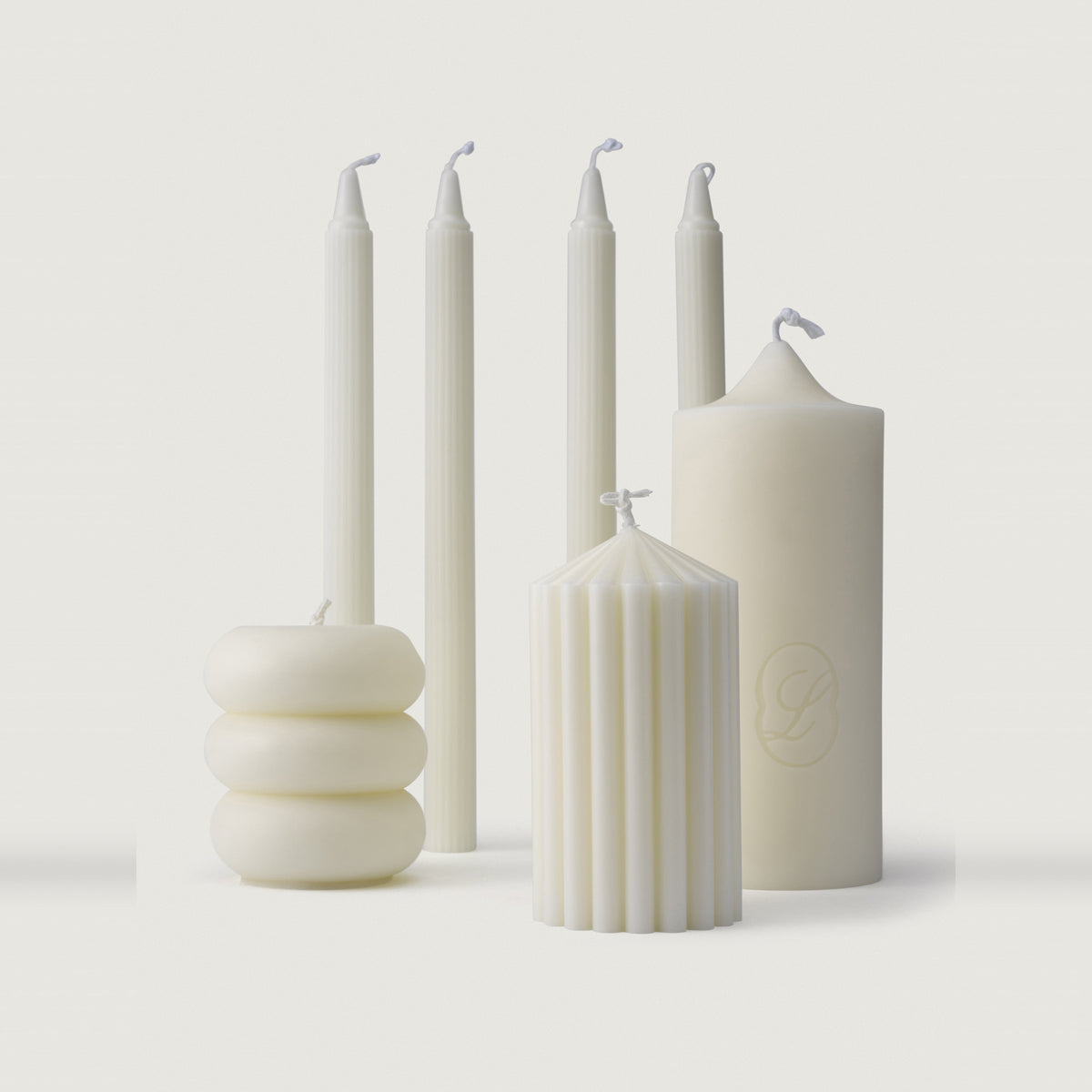
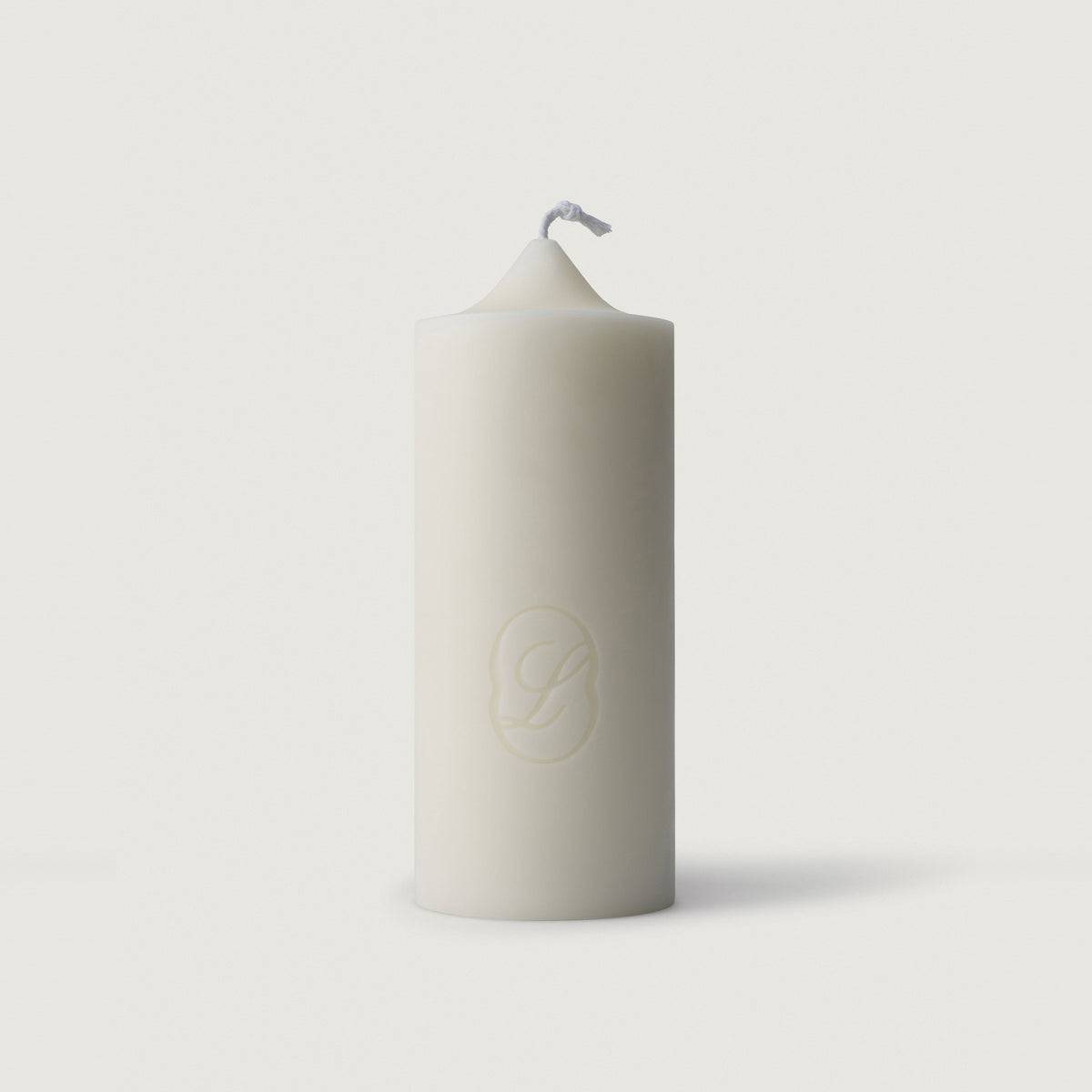
Wax and wick are the whole candle. With so few ingredients, each one has to be right for the form it sits in. Our Signature Candle is 20 cm tall, 8 cm across and weighs 800 g, with a measured burn time of 180 to 200 hours. Edition No. 01 brings our sculptural pillars together as a numbered set. You can read more about our materials in The Standard.
To end a burn without bending or drowning the wick, a snuffer works well; we compared the options in How to Put Out a Candle. Burn for up to 4 hours at a time.
Frequently asked questions
What does the wick of a candle do?
It draws melted wax up from the pool below the flame and holds it in the heat, where the wax turns into vapour and burns. The wick is the route for the fuel; the wax is the fuel.
Why doesn't a candle wick burn up straight away?
The liquid wax in the wick absorbs much of the heat as it evaporates, which protects the cotton. Only the tip, where the wax has already gone, slowly chars and burns away.
What is the string in a candle called?
It is called the wick. In Dutch it is the lont.
How long should a candle wick be?
Trim it to 0.5 to 1 cm before each burn. A longer wick gives a taller, less steady flame.
What wick do LLIOR candles use?
A cotton wick. Our pillar candles are made from a 50/50 blend of beeswax and soy wax, and our Four Tapers from soy wax, with no paraffin, added fragrance or dye.

Read more
The best candles for a bedroom are quiet ones: a steady pillar, sized for a nightstand or dresser, without added fragrance. Where to place them, how long to burn them before bed, and how to put the...
When the clocks go back on Sunday 25 October 2026, 03:00 becomes 02:00: an extra hour of sleep, lighter mornings for a while, and evenings that turn dark an hour earlier. Sunset times for Amsterdam...