
What Are Candle Wicks Made Of? Cotton, Zinc, Wood and Lead
A candle is only two things: wax and a wick. Most of the attention goes to the wax, but the wick decides how the flame behaves, how quickly the candle burns and how it ends. If you have ever wondered what that small string in the middle actually is, the short answer is this: most candle wicks are made of braided cotton, and some have a core of paper or zinc, or are made of wood instead.
What are candle wicks made of?
Most candle wicks are made of cotton fibres, braided or knitted into a cord and usually coated in wax before they go into the candle. Other wicks add a stiffening core of paper or zinc, and a smaller group are flat strips of wood.
The wick is a fuel line. When you light it, the heat melts the wax around its base. The liquid wax climbs the fibres by capillary action, turns into vapour near the flame and burns. The material and construction of the wick decide how much wax it can draw up, and therefore how large and how steady the flame is.
Are candle wicks made of cotton?
Yes, most of them are. Cotton is the traditional wick material because it draws up liquid wax evenly and burns down together with the candle.
A cotton wick is not a single thread. It is a number of fine yarns braided together, and the way they are braided matters. A flat braid tends to curl over as it burns, so the tip bends into the outer edge of the flame where it is consumed. A square braid stands more upright and is sturdier in a thicker wax. Wick makers use dozens of sizes, because the right wick depends on the wax, the diameter of the candle and its shape.
What are the different candle wick types?
There are four main types: plain cotton wicks, cored wicks, wooden wicks and, historically, lead-cored wicks. Each was developed for a particular kind of candle.
| Wick type | What it is made of | Typically used in |
|---|---|---|
| Cotton (flat or square braid) | Braided cotton yarn, wax-coated | Pillar candles, taper candles, many container candles |
| Cored wick | Cotton around a core of paper or zinc | Container candles and votives, where the wick must stay upright in a deep pool of wax |
| Wooden wick | A flat strip of wood, sometimes layered | Container candles, often chosen for their crackling sound |
| Lead-cored wick | Cotton around a lead wire | Banned in the United States since 2003, restricted in the EU |
Cored wicks: paper and zinc
A cored wick has a stiff centre that keeps it standing upright when the wax around it is fully liquid. That is useful in a jar, where a wide pool of melted wax forms and a soft wick could bend over and drown. Paper and zinc are the common cores.
What are wooden candle wicks made of?
Wooden wicks are thin, flat strips of wood, sometimes with a second veneer laid on top. They give a wide, low flame and are known for a soft crackle, which is why they are mostly found in container candles.
Do candles still have lead wicks?
Lead-cored wicks were once used to keep wicks upright. They have been banned in the United States since 2003 and are restricted in the EU. A wick made only of cotton has no metal core at all.
What is the wick in a candle for?
The wick carries melted wax to the flame. Without it, wax would simply melt; with it, wax becomes a steady, controlled light.
This is also why wick care matters so much. A wick that is too long draws up more wax than the flame can burn, and the flame grows tall and restless. We explain how to keep it at the right length in How to Trim a Candle Wick, and How Short It Should Be: trim to 0.5 to 1 cm before every burn, and burn for no more than 4 hours at a time.
Why we use a cotton wick
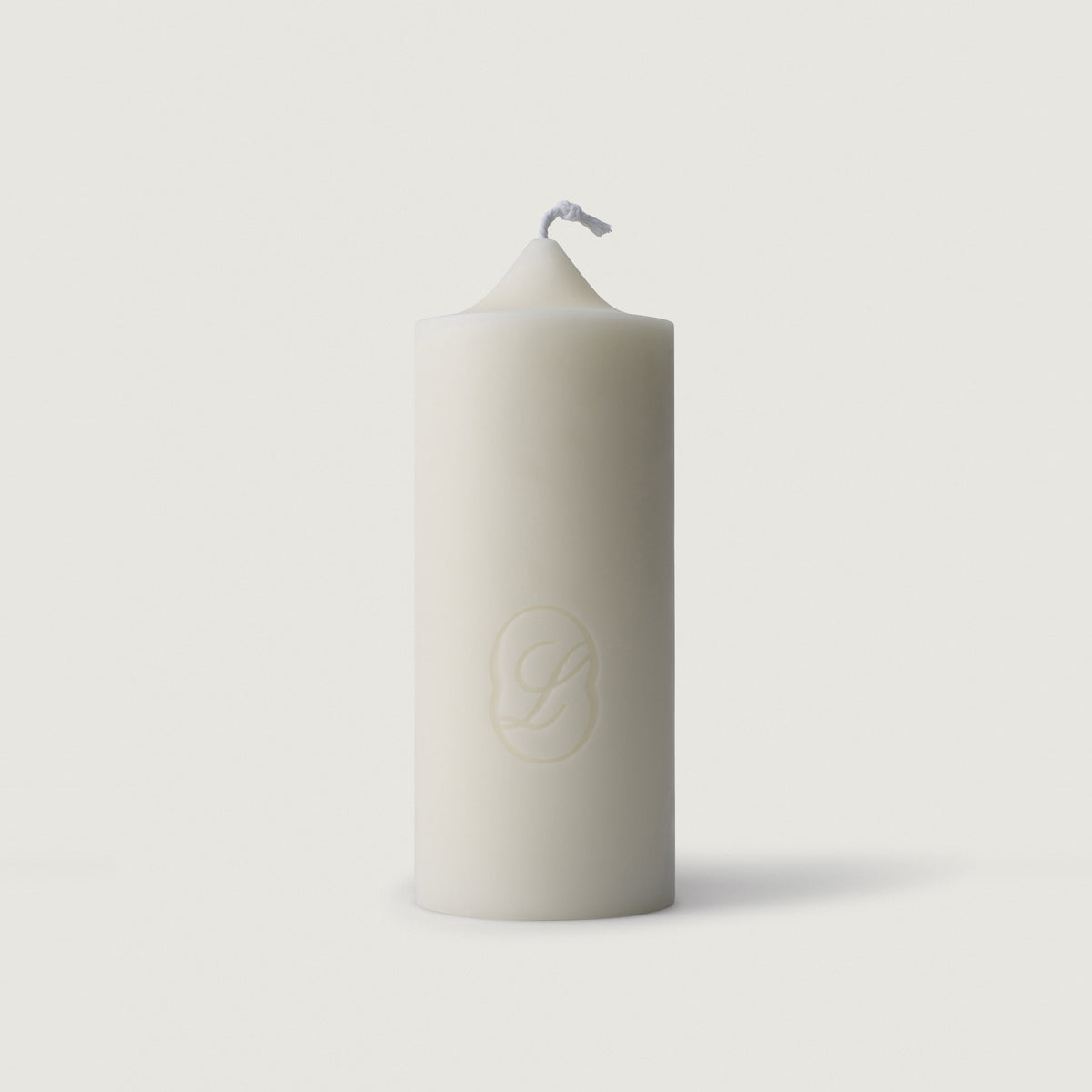
We use a cotton wick because it suits the candles we make: free-standing pillars and tapers that burn down slowly into their own pool of wax.
LLIOR is a Dutch candle brand that makes unscented candles from a 50/50 blend of beeswax and soy wax, with a cotton wick and no paraffin, added fragrance or dye.
A pillar candle has no jar around it; the wax itself is the container. The wick needs to burn down at the same pace as the wax around it, so that the candle keeps its shape and the flame stays in proportion. A cotton wick does exactly that. It shortens as the candle shortens, and with a quick trim before each use it gives a calm, even flame.
It also fits the way we think about ingredients. A candle of wax and wick needs very little else. Our wax is a blend of beeswax and soy, our wick is cotton, and nothing is added for scent or colour. What you see when you look at the candle is what it is made of.
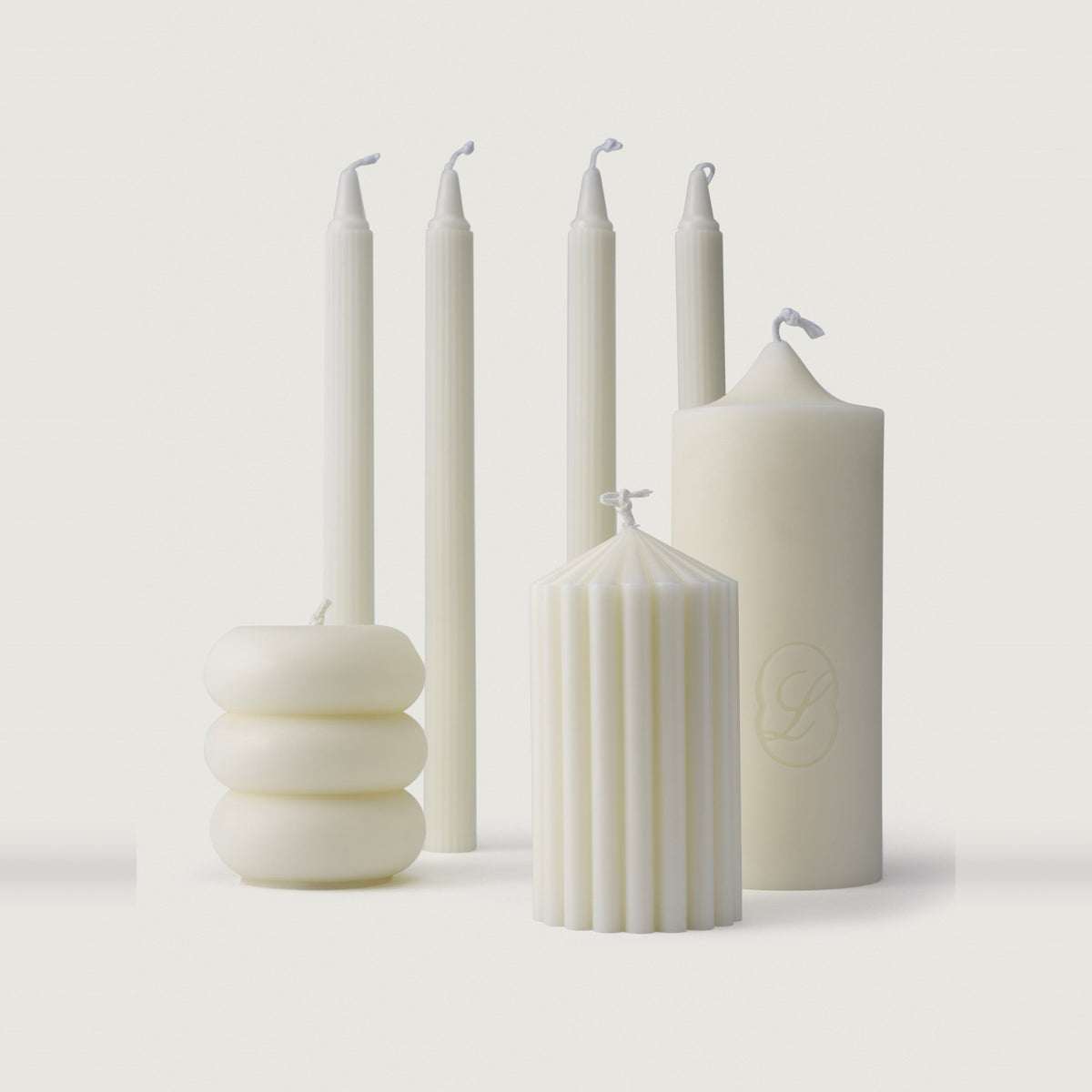
In practice, it means a candle you can return to. The Signature Candle stands 20 cm tall, measures 8 cm across, weighs 800 g and gives 180 to 200 hours of burn time, measured. Four Tapers, 27 cm each and poured in soy wax, also burn on a cotton wick, in a slimmer form.
How to look after a cotton wick
Trim it, keep it centred and put the flame out gently. Those three habits do most of the work.
- Trim to 0.5 to 1 cm before you light the candle, once it has cooled.
- Burn for up to 4 hours at a time, then let the candle rest.
- Keep the wick upright and centred while the wax is still soft after putting it out.
- Lower the flame into the wax with a snuffer rather than blowing it out, so the wick is coated in wax and ready for next time.
Frequently asked questions
What are candle wicks made of?
Most are braided cotton, coated in wax. Some have a paper or zinc core, and some are made of wood.
Are LLIOR wicks made of cotton?
Yes. Every LLIOR candle has a cotton wick, set in a 50/50 blend of beeswax and soy wax.
Why does a cotton wick curl when it burns?
A braided cotton wick is made to bend slightly as it burns, so the tip reaches the hottest part of the flame and burns away. It still needs a trim to 0.5 to 1 cm before each use.
Are lead wicks still sold?
Lead-cored wicks have been banned in the United States since 2003 and are restricted in the EU.
How long should a candle wick be?
Between 0.5 and 1 cm before lighting. Trim it each time the candle has cooled.

Read more
Unscented candles give light and warmth without adding perfume to a room. Why we make only unscented candles, what they are used for, what they smell like when they burn, and how to get the most fr...
Most candles are coloured with a small amount of dye stirred into the melted wax. Here is how candles are coloured, why most of them are, what colour a candle without dye has, and why we leave ours...