
When the Clocks Go Back: Darker Evenings and the First Candle of the Season
When the clocks go back, they move one hour backwards: in the Netherlands and the rest of the EU, on Sunday 25 October 2026 at 03:00 the time becomes 02:00. You gain an extra hour that night, mornings are lighter for a while, and evenings turn dark about an hour earlier. In Amsterdam the sun sets at 18:26 on Saturday and at 17:24 on Sunday. This guide answers what happens when the clocks go back, and why it is also the week many of us light the first candle of the season.
When do the clocks go back in 2026?
In the Netherlands and the rest of the EU, the clocks go back on Sunday 25 October 2026, at 03:00, which becomes 02:00.
The change always falls on the last Sunday of October. In the UK it happens on the same night, one hour earlier on the local clock: at 02:00 British Summer Time the clocks go back to 01:00, and the country returns to Greenwich Mean Time. Most phones and computers change by themselves. Ovens, car dashboards and wall clocks usually need a hand.
Summer time returns on the last Sunday of March. In 2027 that is Sunday 28 March, when the clocks go forward again.
Do the clocks go forward or back in October?
Back. In autumn the clocks go back one hour; in spring they go forward.
An easy way to remember it is the English phrase "spring forward, fall back". In October you set the clock from 03:00 to 02:00, so the hour between two and three in the morning happens twice.
Is it an extra hour in bed when the clocks go back?
Yes. The night from Saturday to Sunday lasts 25 hours instead of 24, so you gain one hour.
If you keep your usual alarm, you wake up an hour later by the old clock. That is the hour people mean when they talk about an extra hour in bed.
Is it darker earlier when the clocks go back?
Yes. The evening turns dark about an hour earlier on the clock, overnight.
The daylight itself does not change from one day to the next; what moves is the hour we call it. In Amsterdam the numbers look like this:
| Date (Amsterdam) | Sunrise | Sunset |
|---|---|---|
| Saturday 24 October 2026 | 08:21 | 18:26 |
| Sunday 25 October 2026 | 07:23 | 17:24 |
| Sunday 15 November 2026 | 08:01 | 16:47 |
| Monday 21 December 2026 | 08:48 | 16:28 |
On the shortest day, 21 December, the sun in Amsterdam sets just before half past four. Times are approximate and differ by a few minutes across the country.
Will mornings be lighter when the clocks go back?
For a few weeks, yes. Sunrise in Amsterdam moves from 08:21 to 07:23 on the day of the change.
After that, the mornings slowly darken again as the days shorten towards December. By the winter solstice the sun rises at about 08:48, later than it did before the clocks went back.
What happens when the clocks go back?
In short: one extra hour of sleep, lighter mornings for a while, and long, early evenings until spring.
- The night. The hour from 02:00 to 03:00 happens twice.
- The morning. Daylight arrives about an hour earlier on the clock.
- The evening. It is dark before most people finish work. Dinner, reading and conversation now happen after sunset rather than before it.
That last change is the one most people notice. The evening becomes a room you are in for many hours, and how it is lit starts to matter.
Why candlelight suits the darker evenings
A candle flame gives a low, warm light of around 1,800 to 1,900 kelvin, warmer than most household bulbs, and it is small enough to light a table rather than a whole room.
A warm-white bulb is usually around 2,700 kelvin. A candle sits below that, closer to the colour of the sky just after sunset. One or two flames do not replace the lamps you read by; they give the evening a centre. Somewhere to sit down, a table to gather at, a clear sign that the day is over.
That is also why we like the change of the clocks as a moment. It is the evening that tells you the season has turned.
A small ritual for the first dark evening
Light the candle when the sun goes down, give it a proper first burn, and put it out with care.
- Trim the wick to 0.5 to 1 cm before you light it. A short wick keeps the flame calm. How to do it: How to Trim a Candle Wick.
- Let the first burn take its time. On a new pillar, let the melted pool spread out towards the edge before you put it out. More in How Long to Burn a Candle the First Time.
- Burn for up to 4 hours at a time. On a long evening, put the candle out, let it cool, trim the wick and light it again.
- Put it out gently. A snuffer lowers the flame without blowing wax across the table. We compared the options in How to Put Out a Candle.
- Never leave a burning candle unattended, and keep it on a stable, heat-resistant surface away from anything that can catch fire.
Why we make our candles without scent
Because a long autumn evening already has its own smells: dinner, rain on a coat, the kitchen. A candle without added fragrance gives light and leaves the room as it is.
LLIOR is a Dutch candle brand that makes unscented candles from a 50/50 blend of beeswax and soy wax, with a cotton wick and no paraffin, added fragrance or dye.
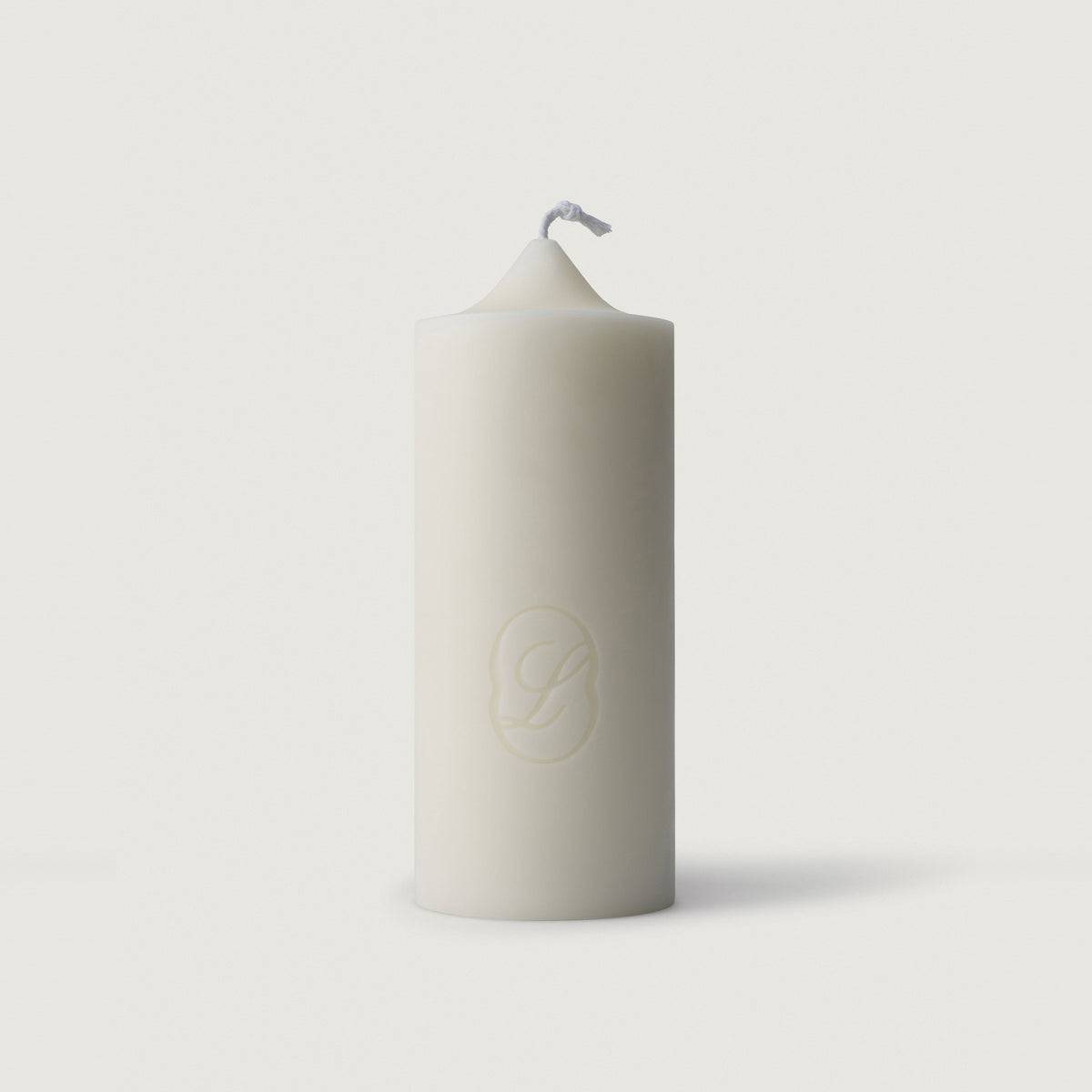
Our Signature Candle is made for evenings like these: 20 cm tall, 8 cm across, 800 g, with a measured burn time of 180 to 200 hours. Lit for a few hours at a time, it sees you through many of the long evenings between now and spring. For a dinner table, we wrote about why we choose unscented in Candles for the Dinner Table, and the whole range is in The Collection.
Frequently asked questions
When do the clocks go back in 2026?
On Sunday 25 October 2026. In the Netherlands and the rest of the EU, 03:00 becomes 02:00. In the UK, 02:00 becomes 01:00 on the same night.
Do you gain or lose an hour when the clocks go back?
You gain an hour. The night from Saturday to Sunday lasts 25 hours.
Is it darker earlier when the clocks go back?
Yes. In Amsterdam the sun sets at 18:26 on Saturday 24 October and at 17:24 on Sunday 25 October 2026.
When do the clocks go forward again?
On the last Sunday of March. In 2027 that is Sunday 28 March.
How long should I burn a candle on a dark evening?
Up to 4 hours at a time. Trim the wick to 0.5 to 1 cm before each burn, and never leave a burning candle unattended.

Read more
A candle wick works by drawing melted wax up through its fibres into the flame, where the wax turns into vapour and burns. How a wick works, why it does not burn up, what the candle string is calle...
Why is my candle flickering? Usually a draught or a wick that is too long. The seven most common causes, why a candle flickers with no wind, why a flame burns too high or too small, and how to get ...