
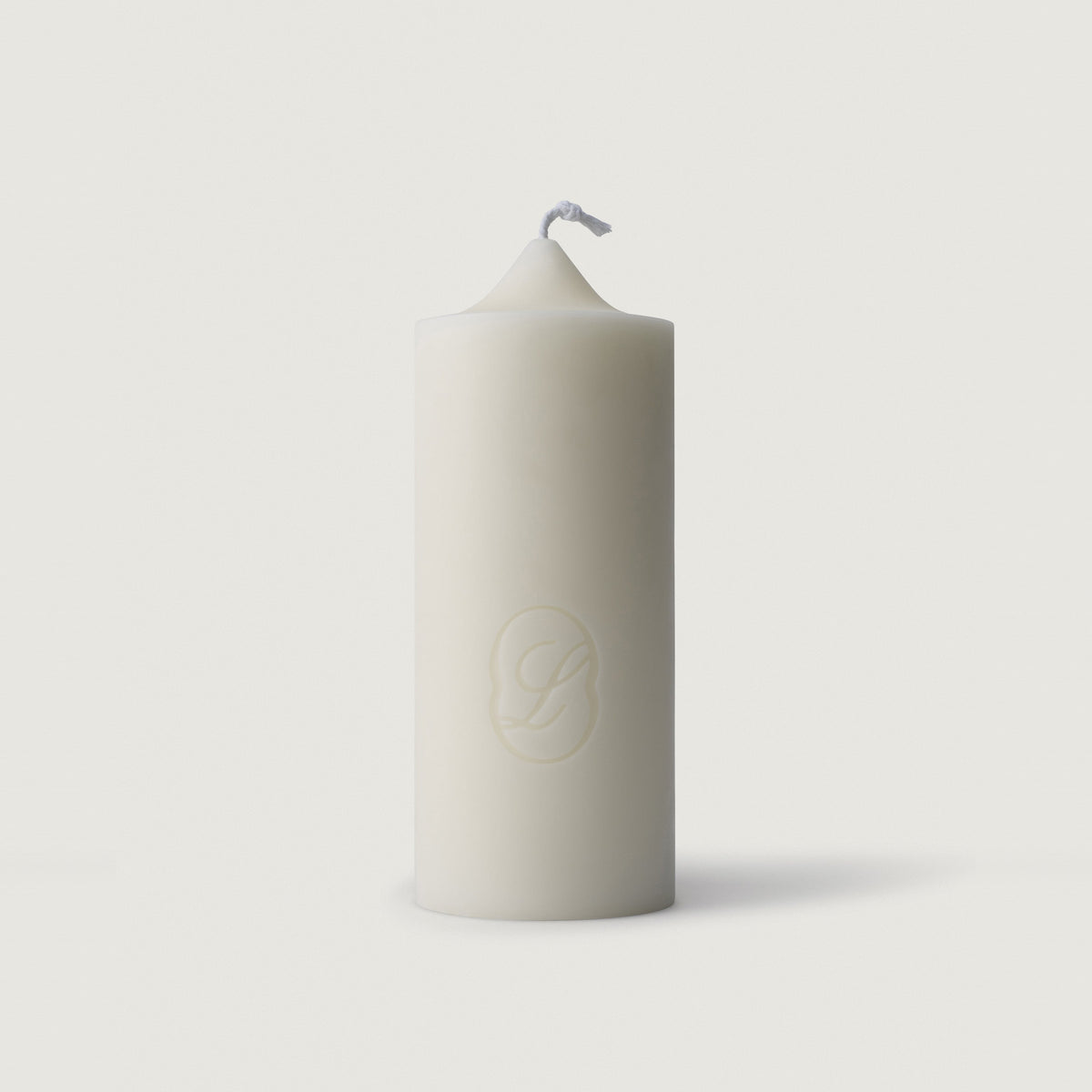
Good Quality Candles: How to Tell a Well-Made Candle Before You Light It
Good quality candles can usually be recognised before you light them. The label names the wax and the wick, the candle states its weight and burn time, it feels dense and even in the hand, and it comes with care instructions. Once lit, a good candle burns with a steady flame and melts evenly. Below is what to check, point by point, and what each point tells you.
How can you tell if a candle is good quality?
Look for four things: named ingredients, a stated burn time, careful finishing and clear care instructions. Together they show that the maker knows what went into the candle and how it will behave.
None of this needs a laboratory. It is on the label, in your hand, or visible during the first evening of burning. A candle that is open about all four leaves little to guess. A candle that says only "wax", or nothing at all, leaves the guessing to you.
What should the label of a good candle say?
At a minimum: the type of wax, the wick material, the weight, the burn time and whether fragrance or colour has been added.
- Wax. Beeswax, soy wax, paraffin or a named blend. A plain "wax" tells you nothing, and "soy blend" can mean soy mixed with other waxes, so look for the full list.
- Wick. Most wicks are braided cotton; others are wood, or cotton with a paper or metal core. A good label says which.
- Weight. In grams, so you know how much wax you are paying for.
- Burn time. In hours, ideally measured rather than estimated.
- Additions. Fragrance, dye or other additives, if there are any.
Our guide to what candles are made of explains each ingredient in more detail, and how to tell if a candle is paraffin covers the label wording that is easiest to miss.
What wax are good quality candles made of?
A good candle is made of a wax its maker is willing to name. Beeswax, soy wax and paraffin are the most common: beeswax comes from honeybees, soy wax from soybean oil and paraffin from petroleum.
Which wax you prefer is your choice. For quality, what matters is that the choice is stated, so you know what you are burning. If you are looking for natural wax, look for beeswax, soy wax or a blend of the two, named as such on the label.
What does a good wick look like?
A good wick is centred, straight and sized to the candle, and it stands about 0.5 to 1 cm above the wax when you light it. Braided cotton is the most common material.
A wick that sits off-centre melts one side of the candle before the other. A wick that is left too long gives a tall, restless flame. Trimming it to 0.5 to 1 cm before every burn keeps the flame calm; our guide on how to trim a candle wick shows how.
Why do weight and burn time matter?
Weight tells you how much wax you are buying; burn time tells you how long it will last. Together they let you compare candles by the hour of light rather than by the price tag.
An example: The Signature Candle weighs 800 g and burns for 180 to 200 hours, measured. At €34, that is roughly 17 to 19 cents per hour of light.
A burn time only holds if the candle is burned as intended: a trimmed wick, no draught and no more than four hours at a time. More on that in how long does a candle burn.
How should a good quality candle look and feel?
Dense and evenly finished: a smooth or deliberately textured surface, a flat base that stands without wobbling, and no cracks or chips.
Natural wax can vary slightly in tone from one batch to the next, especially when no dye is added. That is not a flaw; it is simply the colour of the wax itself, as we explain in dye-free candles.
How does a good candle burn?
With a steady flame of moderate height and a pool of melted wax that spreads evenly across the top. Give it a proper start: let the first burn last until the melted wax has almost reached the edge, usually at least two hours. Our guide to the first burn explains why.
A flame that keeps flickering usually points to a draught or a wick that needs trimming, not to the candle itself. See why is my candle flickering.
Are expensive candles better quality?
Price alone does not prove quality. What a higher price should buy is visible: a named wax, more of it, a considered wick, careful finishing and a measured burn time.
If a candle costs more, the label should show you why. We go into this in why are candles so expensive.
A quick checklist for good quality candles
| Check | What to look for |
|---|---|
| Label | Wax and wick named; any additions stated |
| Weight | Given in grams |
| Burn time | Given in hours, ideally measured |
| Wick | Centred, straight, 0.5 to 1 cm when lit |
| Finish | Flat base, even surface, no cracks |
| Care | Instructions for trimming, the first burn and burn length |
How LLIOR makes its candles
LLIOR is a luxury candle brand from Amsterdam that makes natural, unscented design candles from beeswax and soy wax, poured by hand, with a cotton wick and no colour.
Each candle is hand-poured. The Signature Candle is 20 cm tall, 8 cm across and 800 g, with 180 to 200 hours of burn time; the burn times of the whole collection are listed in our FAQ, and what goes into every candle is set out in The Standard. You can see the full range in The Collection.
Why LLIOR
We want to make the most beautiful natural candle in Europe. So we leave out everything that does not need to be there.
Natural. Beeswax and soy, in equal parts. A cotton wick. No scent, no colour, no paraffin. Wax and wick: that is the whole list.
Long. The Signature Candle burns for 180 to 200 hours, measured. A whole winter of evenings.
By hand. Every candle is poured by hand, in small batches. Designed in Amsterdam.
To look at. Design candles, beautiful even when unlit.
To give. Without scent, you never guess wrong. That is why people give LLIOR to the ones they love.
We believe you should know what you light. See the collection.
For the full picture, read our guide to natural candles.
Frequently asked questions
What are good quality candles made of?
A named wax, such as beeswax, soy wax or a stated blend, and a wick whose material is listed, usually braided cotton. Anything added, such as fragrance or dye, should be on the label too.
Is a heavier candle better?
A heavier candle holds more wax and usually burns longer, but weight is only useful next to a stated burn time. Compare grams and hours together.
How long should a good quality candle burn?
That depends on its size. A good candle states its burn time in hours. The Signature Candle, at 800 g, burns for 180 to 200 hours.
How do I make a good candle last?
Trim the wick to 0.5 to 1 cm before each burn, keep the candle out of draughts, let the first burn run until the wax has melted almost to the edge, and burn it for no more than four hours at a time.

Lees meer

How to decorate with candles at home: where to put them in the living room, how to group pillars and candlesticks in odd numbers and different heights, and a few habits that keep decorative candles...
If your candle keeps going out, the wick is usually too short, drowning in melted wax or caught in a draught. Here is how to recognise each cause and fix it in a minute.