
Why Do Scented Candles Give Me a Headache?
You light a candle to make the evening softer. Twenty minutes later there is a dull pressure behind your eyes, the room feels heavy, and you blow it out. If that sounds familiar, you are not imagining it, and you are not being difficult. It is one of the most common complaints about candles, and it has a fairly simple explanation.
Why scented candles can give you a headache
A scented candle is two things at once: a flame, and a device for spreading fragrance through a room. The heat of the melt pool pushes fragrance compounds into the air continuously, for as long as the candle burns. In a closed living room or bedroom, that concentration builds up.
For many people that is pleasant. For others it is the start of a headache. Survey research by Anne Steinemann, who has studied fragranced consumer products across several countries, found that roughly a third of adults report some kind of adverse reaction to fragranced products, with headaches and migraine among the most frequently mentioned. Strong smells are also one of the triggers migraine sufferers report most often.
In other words: the problem is often not the candle. It is the perfume in the candle.
Signs it is the fragrance, not the flame
- The headache starts after the candle has been burning for a while, not immediately.
- It is worse in small or poorly ventilated rooms.
- You react the same way to perfume, air fresheners, scented laundry products or a heavily scented shop.
- Strong, sweet or "warm" scents (vanilla, amber, cinnamon) bother you more than others.
- The feeling fades once you leave the room or open a window.
If several of these apply, fragrance is the most likely suspect. If headaches are frequent or severe, it is worth discussing with your GP, because many things can cause them.
What you can do without giving up candlelight
1. Ventilate while you burn
Keep a window slightly open, especially in smaller rooms. It lowers the concentration of whatever the candle releases.
2. Shorten the burn
Burn for an hour or two rather than an entire evening, and let the room air out afterwards.
3. Keep the flame calm
Trim the wick to between 0.5 and 1 cm before each burn and keep the candle away from drafts. A tall, flickering flame burns less evenly.
4. Remove the fragrance altogether
This is the step most people skip, because almost every candle on the market is scented. But an unscented candle gives you the thing you actually wanted, the light, without the part that bothers you.
What to look for in an unscented candle
"Unscented" on the label is a good start, but read a little further.
- No added fragrance at all. Some candles labelled "lightly scented" or "natural scent" still contain fragrance oils or essential oils.
- A named wax. Look for a brand that tells you exactly which wax is used. Beeswax and soy wax are natural waxes; paraffin is a by-product of petroleum refining.
- A simple composition. Wax and wick. Fewer ingredients means fewer unknowns in your room.
- A cotton wick. Straightforward and easy to trim.
Candlelight for the people who stopped lighting candles
Many people who get headaches from scented candles simply stop using candles. That is a shame, because what they miss is rarely the smell. It is the light: the way a flame changes the temperature of a room in the evening.
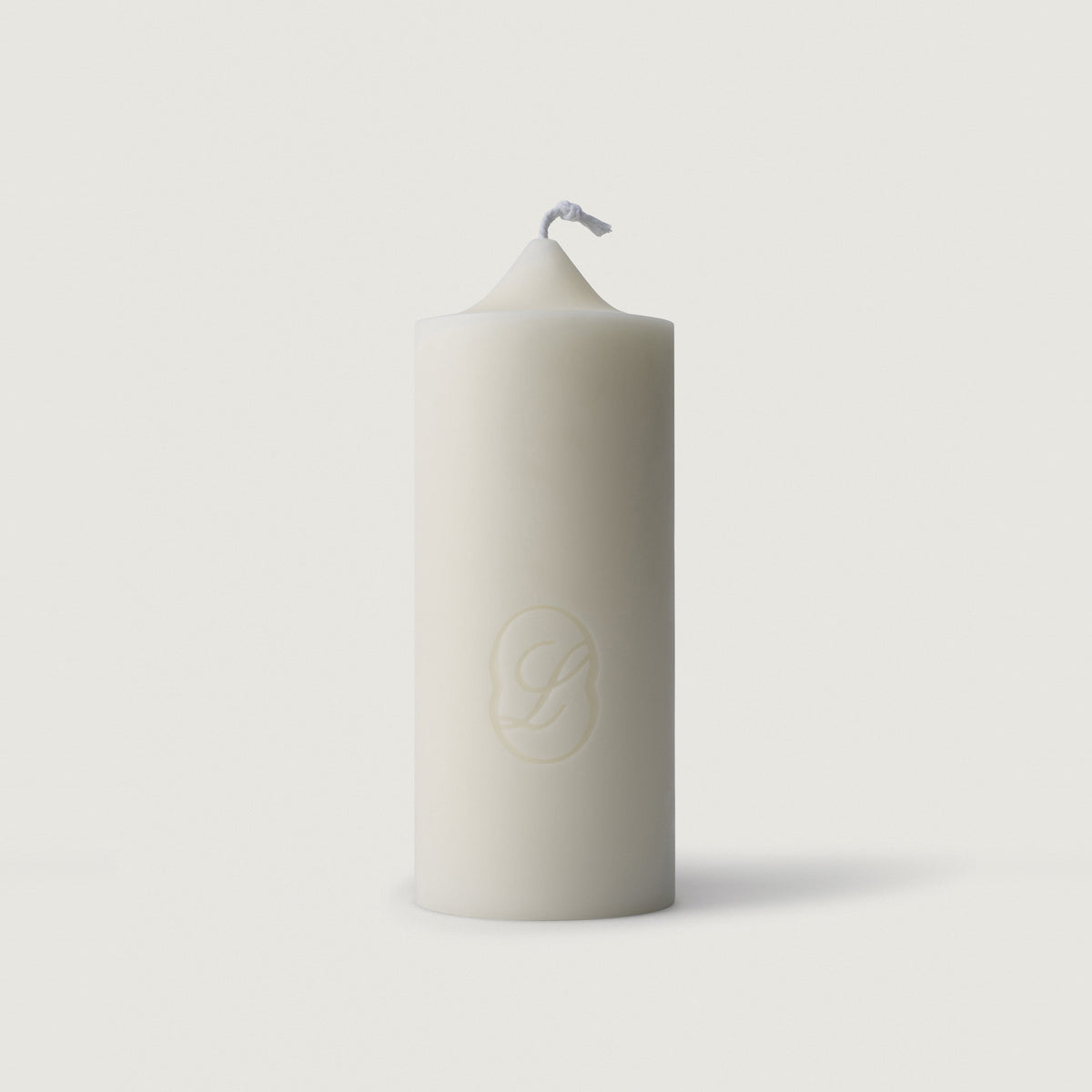
That is the reason LLIOR candles contain no added fragrance. Every candle is made from a 50/50 blend of beeswax and soy wax, with a cotton wick and no paraffin. Wax and wick, nothing else. The form carries the object, not the perfume.
The Signature Candle is a good place to start: a single pillar made to be returned to, evening after evening. If you prefer a composition, the Pillar Candle Set places two forms together. You can read more about why we chose to leave fragrance out on The Principle, and about our materials on The Standard.
Frequently asked questions
Can scented candles cause headaches?
Many people report headaches from scented candles, usually because of the fragrance released into the room. People who are sensitive to perfume or air fresheners often react to scented candles in the same way.
Are unscented candles better if I get headaches from scent?
An unscented candle removes the fragrance, which is the most common reason people react to candles. It does not make a candle a medical solution, so if your headaches are frequent, talk to your doctor.
What is the difference between beeswax, soy and paraffin?
Beeswax is made by bees, soy wax is made from soybean oil, and paraffin wax is made from petroleum. LLIOR uses beeswax and soy in equal parts and no paraffin.
How do I burn a candle with the least smoke?
Trim the wick to between 0.5 and 1 cm, keep the candle out of drafts and extinguish it with a snuffer rather than blowing it out.

