
Why Is My Candle Flickering? Seven Causes and How to Calm the Flame
Why is my candle flickering? Almost always because of a draught or a wick that is too long. Trim the wick to 0.5 to 1 cm, move the candle out of moving air, and the flame usually calms within minutes.
Updated 26 November 2026
A candle flame is never entirely still, and a gentle sway is part of its charm. But a flame that jumps, sputters or stretches tall is telling you something, and nearly every cause can be fixed in a minute. If a flame is already too large, put it out calmly first: The Snuffer, a brass snuffer of 16.5 cm, lowers the flame into the wax without blowing, so you can trim the wick and light it again. Below are the seven most common reasons a candle flickers, with the fix for each.
Why is my candle flickering?
A candle flickers when the steady flow of air or fuel to the flame is disturbed: most often by a draught, or by a wick that is too long for the candle.
A flame burns melted wax that the wick draws up from the pool below. When that supply is even and the air around it is calm, the flame settles into a quiet teardrop shape. Anything that pushes the flame sideways or changes how much wax reaches it makes it waver. We explain the mechanism in more detail in How Does a Candle Wick Work?
What does it mean when a candle flame is flickering?
In practical terms, it means the flame is getting an uneven supply of air or wax. It is a signal about where the candle stands and how long the wick is, nothing more.
A flickering flame tells you to look at two things: the air around the candle and the wick itself. Fix those and the flame settles. A flame that keeps flickering after both are right usually has something in the melt pool, or a wick that leans to one side.
Is it normal for a candle flame to flicker?
A little movement is normal. A flame that keeps jumping, sputtering or growing taller is not, and is worth a closer look.
Even in a quiet room, warm air rises from the flame itself and the flame moves slightly with it. That soft movement is what makes candlelight feel alive. What you want to avoid is a flame that dances so much the wax melts unevenly on one side, or one that becomes noticeably taller than when you lit it.
Why is my candle flickering so much? Seven common causes
Work through these in order. The first two explain most flickering flames.
| Cause | What you see | Fix |
|---|---|---|
| Draught | Flame bends from side to side | Move the candle away from windows, doors, fans and grilles |
| Wick too long | Tall, restless flame | Put it out, let it cool, trim to 0.5 to 1 cm |
| Carbon cap | Dark knob on the wick tip, larger flame | Trim it off once the candle is cool |
| Bits in the melt pool | Uneven flame, small flare beside the wick | Lift them out when the wax is solid |
| Leaning wick | Flame and melt pool off to one side | Straighten the wick gently before lighting |
| Drowning wick | Small flame that sputters | Remove a little solid wax so 0.5 to 1 cm stands free |
| Candles too close | Flames lean towards each other | Keep at least 10 cm between burning candles |
- A draught. An open window, a door, a fan or a busy hallway moves air across the flame and bends it from side to side.
- A wick that is too long. A long wick draws up more wax than the flame needs. The flame grows taller and becomes restless. Trim it to 0.5 to 1 cm.
- A carbon cap on the wick. After a long burn, the tip of the wick can collect a small dark knob of carbon. It makes the flame larger and less even. Trim it off once the candle is cool.
- Bits in the melt pool. A spent match, a piece of trimmed wick or dust in the wax can catch alight next to the wick and make the flame uneven. Lift them out when the wax is solid.
- A wick that leans. A wick that bends to one side heats one edge of the candle more than the other and the flame follows. Straighten it gently before lighting.
- A wick that is drowning. If the melt pool is deep and the wick is short, the flame can sputter as it struggles for fuel. This often happens after a wick has been cut too short.
- Candles placed too close together. Flames that stand close heat each other and create their own currents of warm air. Keep at least 10 cm between burning candles.
Why is my candle flickering with no wind?
Because air moves indoors even when you cannot feel it: a radiator, a ventilation grille, a cooker hood or someone walking past is enough to move a flame.
Warm air rising from a radiator or underfloor heating creates a steady upward current. Ventilation grilles and extractor fans pull air across a room. A door opening in another part of the house can be enough. If the room seems still and the flame still flickers, check the wick first: a long wick or a carbon cap produces a restless flame in perfectly calm air.
Why does my candle flame burn so high?
Almost always because the wick is too long. Put the candle out, let it cool, and trim the wick to 0.5 to 1 cm before lighting it again.
Never trim a wick while the candle is burning or still warm. A tall flame also melts the wax faster, so a candle with an untrimmed wick gives fewer hours in total. Our guide How to Trim a Candle Wick shows how to do it with ordinary scissors.
Why is my candle flame so small?
Usually because the wick is too short or is sitting low in a deep pool of wax. In the first minutes after lighting, a small flame is normal.
When you first light a candle, the flame is small until the wax around the wick has melted and starts to feed it. If it stays small after that, the wick may have been trimmed too far. Put the candle out, let it harden, and carefully remove a little of the solid wax around the wick so that 0.5 to 1 cm stands free.
How to stop a candle from flickering
Trim the wick, move the candle out of moving air, and keep the melt pool clean. That solves almost every case.
- Trim before every burn. 0.5 to 1 cm, cut straight across, with the candle cool.
- Find a calm spot. Away from open windows, doorways, fans, radiators and ventilation grilles.
- Keep the wax clean. Remove matches, wick trimmings and dust before you light the candle.
- Centre the wick. Stand it upright gently with your fingers before you light it.
- Give candles space. At least 10 cm between flames.
- Burn for up to 4 hours at a time. Then put the candle out, let it cool and trim the wick before the next burn.
If a flame becomes very large or keeps jumping, put it out rather than waiting for it to settle. A snuffer does that calmly, without blowing wax across the table; we compared the options in How to Put Out a Candle. And never leave a burning candle unattended.
Why a steady flame suits natural wax
A calm flame melts the wax evenly on every side, which is how a pillar candle is meant to burn.
LLIOR is a luxury candle brand from Amsterdam that makes natural, unscented design candles from beeswax and soy wax, poured by hand, with a cotton wick and no colour. A pillar stands free, without a jar around it, so the wick is always easy to reach and easy to trim. That small habit, a trim before every burn, is most of what a steady flame asks for.
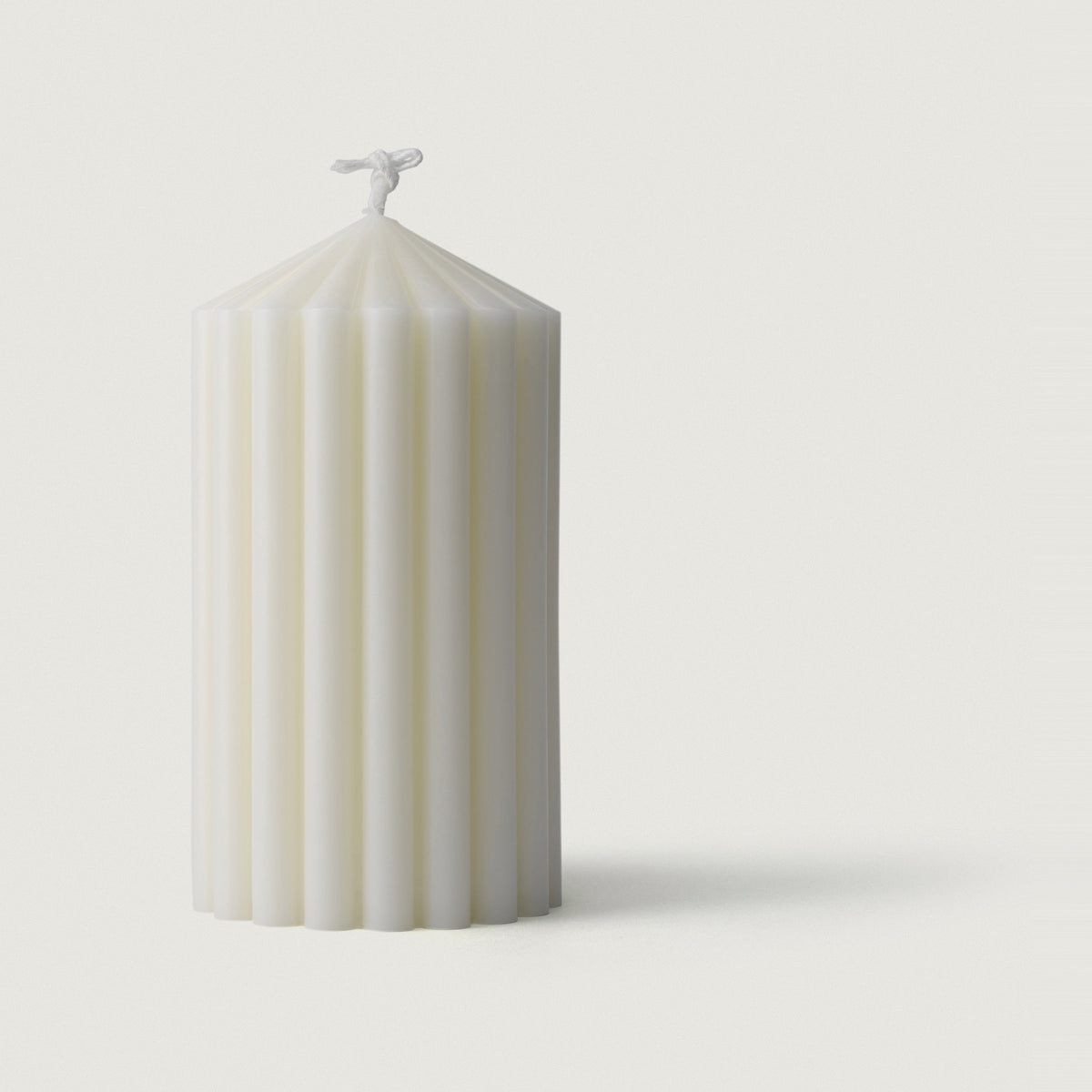
The fluted sides of our Pillar Candle II catch the light of the flame in narrow bands, which is at its best when the flame is quiet. You can read more about what goes into our candles on The Standard.
From LLIOR
The Snuffer, 12 euros at the time of writing: brass, 16.5 cm, for putting out a restless flame without blowing. Pillar Candle II, 26 euros, 60 to 70 hours of burn time. The whole range is in The Collection. We ship within the EU.
Why LLIOR
We want to make the most beautiful natural candle in Europe. So we leave out everything that does not need to be there.
Natural. Beeswax and soy, in equal parts. A cotton wick. No scent, no colour, no paraffin. Wax and wick: that is the whole list.
Long. The Signature Candle burns for 180 to 200 hours, measured. A whole winter of evenings.
By hand. Every candle is poured by hand, in small batches. Designed in Amsterdam.
To look at. Design candles, beautiful even when unlit.
To give. Without scent, you never guess wrong. That is why people give LLIOR to the ones they love.
We believe you should know what you light. See the collection.
For the full picture, read our guide to natural candles.
Frequently asked questions
Is it normal for a candle to flicker?
A gentle sway is normal. A flame that keeps jumping, sputtering or growing taller usually points to a draught or a wick that is too long.
What does it mean when a candle flame flickers?
It means the flame is getting an uneven supply of air or wax, usually from a draught or a long wick. Trim the wick to 0.5 to 1 cm and move the candle to a calmer spot.
Why does my candle flicker when there is no wind?
Air still moves indoors, from radiators, ventilation grilles and people walking past. A long wick or a small carbon cap on the wick also makes a flame restless in calm air.
Should I put out a candle that flickers a lot?
Yes, if the flame is large or keeps jumping. Put it out, let the candle cool, trim the wick to 0.5 to 1 cm and move it to a calmer spot before lighting it again.
How short should a candle wick be?
Between 0.5 and 1 cm above the wax, trimmed before every burn while the candle is cool.
How long can you burn a candle at once?
We recommend up to 4 hours at a time, then letting the candle cool and trimming the wick before the next burn.

Read more
When the clocks go back on Sunday 25 October 2026, 03:00 becomes 02:00: an extra hour of sleep, lighter mornings for a while, and evenings that turn dark an hour earlier. Sunset times for Amsterdam...
The parts of a candle, explained one by one: wax, wick, wick tip, carbon cap, melt pool, wick tab, ribs and the three zones of a candle flame. A short glossary of what each part does, and which par...