
What Is a Candle Snuffer? Its Name, Purpose and How to Choose One
It is one of the quietest objects on a table: a small bell on a long, slender handle. Many people have seen one in a church, at a grandparent's house or beside a candle in a shop, without quite knowing what it is called or why anyone would use it instead of simply blowing. This guide explains what a candle snuffer is, what it is for, what it is called, what snuffers are made of and how to choose one that suits the candles you burn.
What is a candle snuffer?
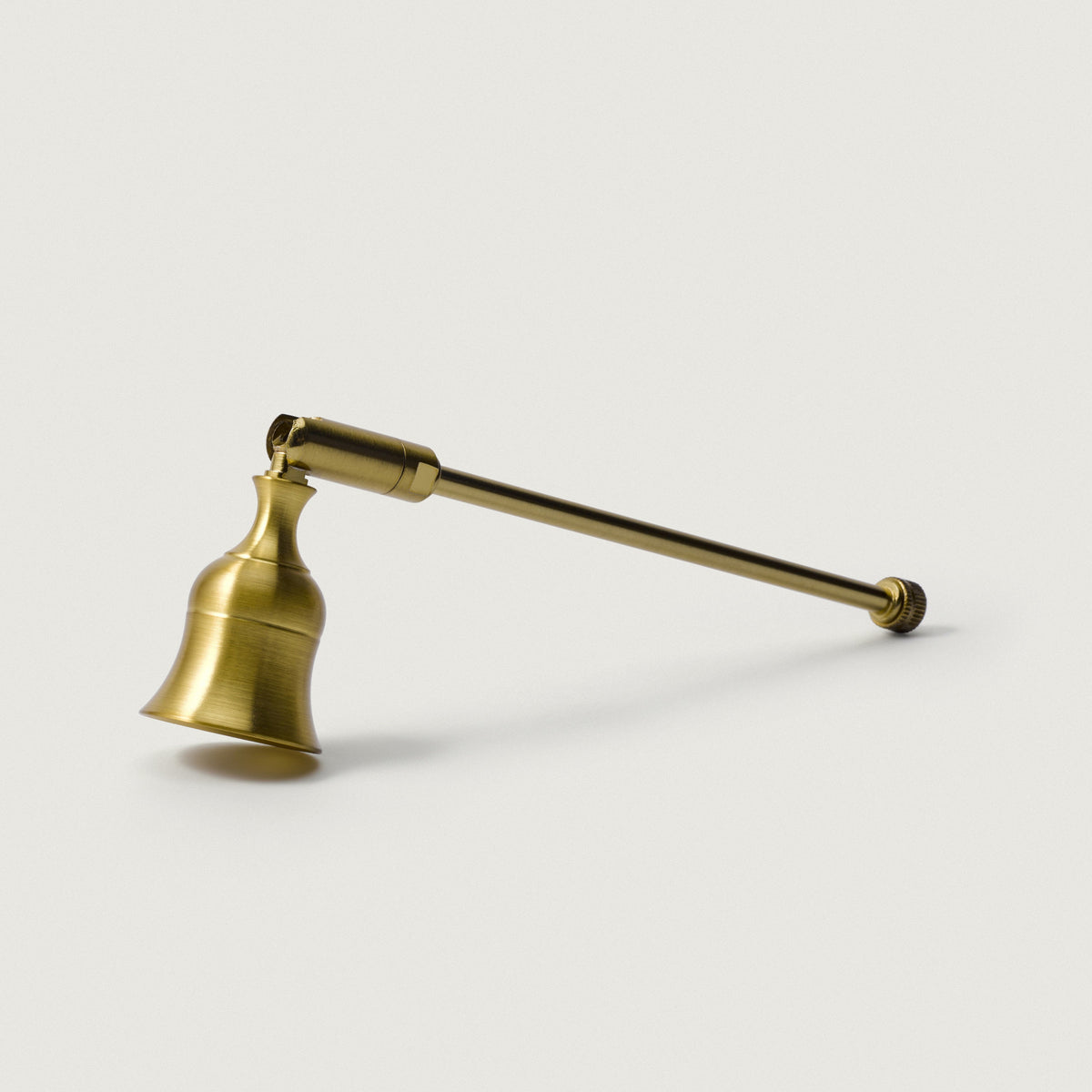
A candle snuffer is a small cup or bell on a long handle that you lower over a flame to put a candle out. Covered by the bell, the flame runs out of air and goes out within a second or two, without anyone blowing across the wax.
A typical snuffer has three parts: the bell (also called the cone or cup), which covers the flame; the stem, which keeps your hand at a comfortable distance from the heat; and the handle or grip. Some stand on a small foot, some hang from a hook, and some simply lie flat beside the candle.
What is a candle snuffer used for?
A candle snuffer is used to put out a candle calmly: without a gust of air over the melted wax, without spatters on the table and without bending the wick.
That last point matters more than it seems. A wick that has been blown sideways or knocked over burns off-centre the next evening, and on a pillar candle, which has no jar to hold it, an off-centre flame melts one side faster than the other. A snuffer lowers straight down and lifts straight up, so the wick stays upright, ready for the next time it is lit.
The long stem has a second use. As a pillar candle burns, the flame sinks a little below the rim of wax around it. A snuffer reaches down to it easily, with your fingers well away from the flame.
What is a candle snuffer called? Other names and meaning
Today a candle snuffer is also called a candle extinguisher, a candle bell or simply a snuffer; in Dutch it is a kaarsendover. To snuff a candle means to put it out.
The meaning of the word has shifted over the centuries. Until the nineteenth century, "snuffers" usually meant a pair of scissors with a small box attached. Early candle wicks did not burn away on their own, so the charred end, the "snuff", had to be cut off regularly while the candle was still burning; the box caught the trimmed piece. The bell-shaped tool we now call a snuffer was then usually known as an extinguisher. There was also the douter: a scissor-like tool with two flat plates that pinched the wick to put the flame out. Later, braided cotton wicks that bend into the flame and burn away by themselves made the scissors unnecessary, and the name "snuffer" passed to the bell.
What does a candle snuffer look like?
Most candle snuffers look like a small, upturned cone or bell, a few centimetres across, on a stem of roughly 15 to 30 cm.
Shapes vary from simple and straight to ornate, with curled handles or decorated bells. Antique and vintage snuffers are often in brass, silver or iron, and the scissor types with their little boxes still turn up in antique shops. Church snuffers are usually much longer, made to reach tall altar candles.
What are candle snuffers made of?
Candle snuffers are usually made of metal: brass, stainless steel, iron, or silver and silver plate. Metal can stand the brief heat of the flame and does not burn or melt.
Brass is the classic choice. It has enough weight to feel steady in the hand, which helps you lower the bell straight down, and its warm colour sits well next to candlelight. Over time and with touch, brass slowly darkens into a softer patina.
How do you choose a candle snuffer?
Choose a bell that is wider than the flame and a stem long enough to reach into a candle that has burned down. A few points help:
- Bell size. A bell of around 3 cm across covers the flame of most household candles, from slim tapers to wide pillars.
- Length. A stem of 15 cm or more reaches into the centre of a pillar candle without your hand coming close to the flame.
- Weight and balance. A snuffer with some weight is easier to hold still, and a still hand keeps the wick upright.
- Where it lives. A snuffer works best when it is within reach, so choose one you are happy to leave beside the candle.
How do you use a candle snuffer properly?
Lower the bell straight over the flame, hold it there for three to five seconds, then lift it straight up. Do not press the bell into the melted wax; it only needs to cover the flame.
The bell is warm afterwards, so set the snuffer down on a heat-resistant surface. If you want to compare a snuffer with blowing or dipping the wick, our guide on how to put out a candle goes through each method step by step.
Candle snuffer and wick trimmer: do you need both?
They do different jobs: a snuffer puts the flame out, a wick trimmer shortens the wick before the next burn.
Before every burn, once the candle has cooled, trim the wick to 0.5 to 1 cm. Wick trimmers make this easier deep inside a candle, but sharp scissors work too. Our guide on how to trim a candle wick explains the method. Together with a first burn of at least two hours and no more than four hours at a time, these are the small habits in our candle care guide.
How do you clean a candle snuffer?
Let the snuffer cool, wipe it with a soft, dry cloth, and lift any wax out of the bell once it has hardened.
Wax that ends up inside the bell can be loosened with a wooden stick, or wiped out with a paper towel while the bell is still slightly warm. On brass, the slow darkening is natural; some people leave it, others polish their snuffer now and then to keep it bright.
Why we make a snuffer
LLIOR is a luxury candle brand from Amsterdam that makes natural, unscented design candles from beeswax and soy wax, poured by hand, with a cotton wick and no colour.
Our pillar candles are made to be lit many evenings. The Signature Candle, 20 cm tall and 800 g, has a measured burn time of 180 to 200 hours, and every one of those evenings ends with putting the flame out. The Snuffer is our answer to that moment: brass, 16.5 cm long, with a bell of 3.3 cm and a weight of 40 grams. It lowers the flame into the wax instead of blowing it out, so the wick keeps its shape for the next time. We see it as part of the candle rather than an accessory.
Why LLIOR
We want to make the most beautiful natural candle in Europe. So we leave out everything that does not need to be there.
Natural. Beeswax and soy, in equal parts. A cotton wick. No scent, no colour, no paraffin. Wax and wick: that is the whole list.
Long. The Signature Candle burns for 180 to 200 hours, measured. A whole winter of evenings.
By hand. Every candle is poured by hand, in small batches. Designed in Amsterdam.
To look at. Design candles, beautiful even when unlit.
To give. Without scent, you never guess wrong. That is why people give LLIOR to the ones they love.
We believe you should know what you light. See the collection.
For the full picture, read our guide to natural candles.
Frequently asked questions
What is the purpose of a candle snuffer?
To put a candle out without blowing: no gust of air over the melted wax, no spatters, and a wick that stays upright for the next burn.
What is another name for a candle snuffer?
A candle extinguisher or candle bell. Historically, "snuffers" were scissors for trimming the wick, and the bell was called an extinguisher. In Dutch it is a kaarsendover.
Can you use a candle snuffer on taper candles?
Yes. Lower the bell straight down over the flame and lift it straight up, so the slender taper is not knocked and the wick stays centred.
What can you use instead of a candle snuffer?
Dipping the wick into the melted wax and straightening it again also works, and in a pinch a metal spoon held over the flame. A snuffer is simply made for the job and easier to hold steady.
Do you need a snuffer for a pillar candle?
You do not have to, but it helps. A pillar burns down the centre, and a snuffer reaches the flame easily while keeping the wick upright and the wax in place.

Read more
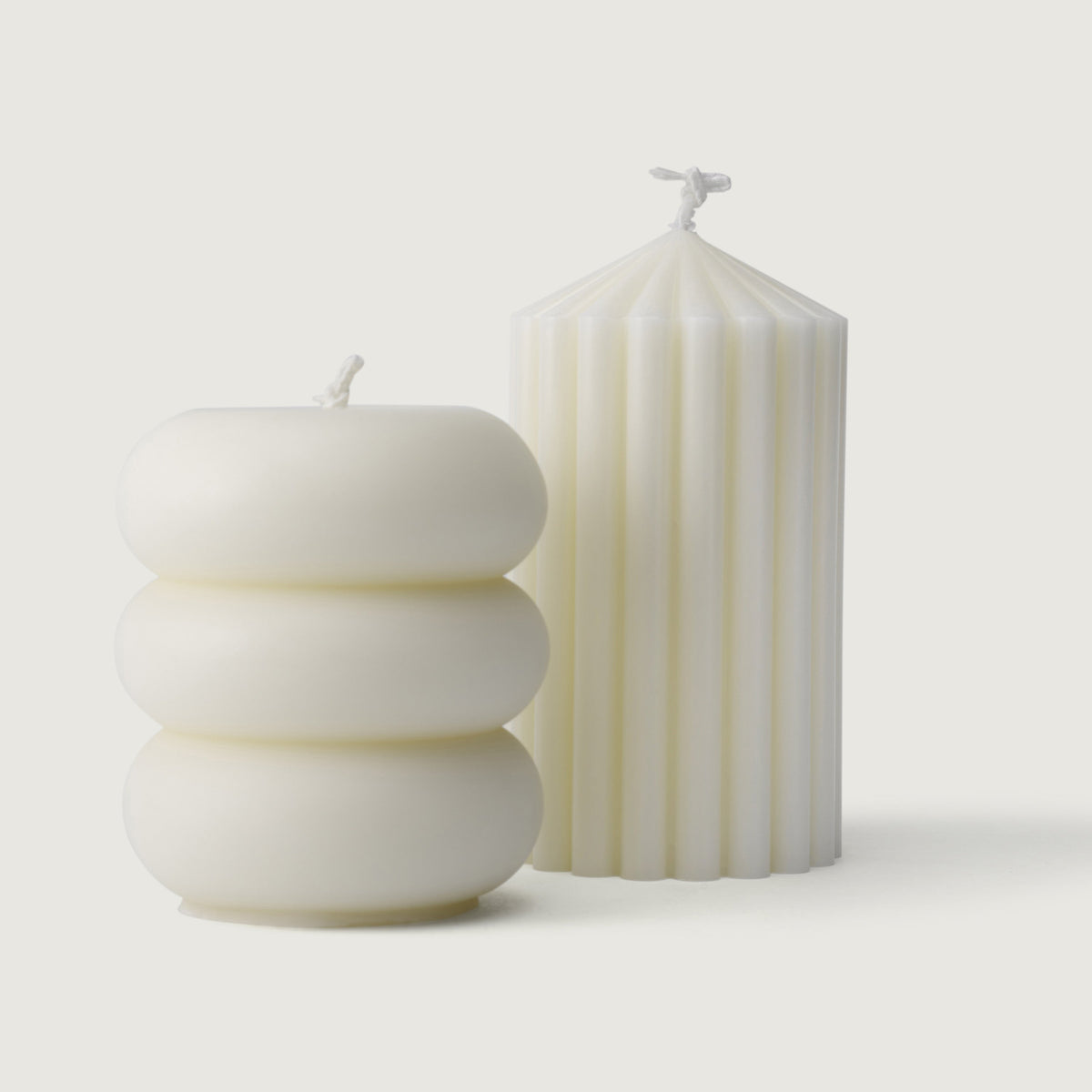
What does hygge mean? The Danish word for a warm, unhurried feeling of comfort and togetherness: where it comes from, how to say it, why candles sit at its centre, and six ways to create hygge with...
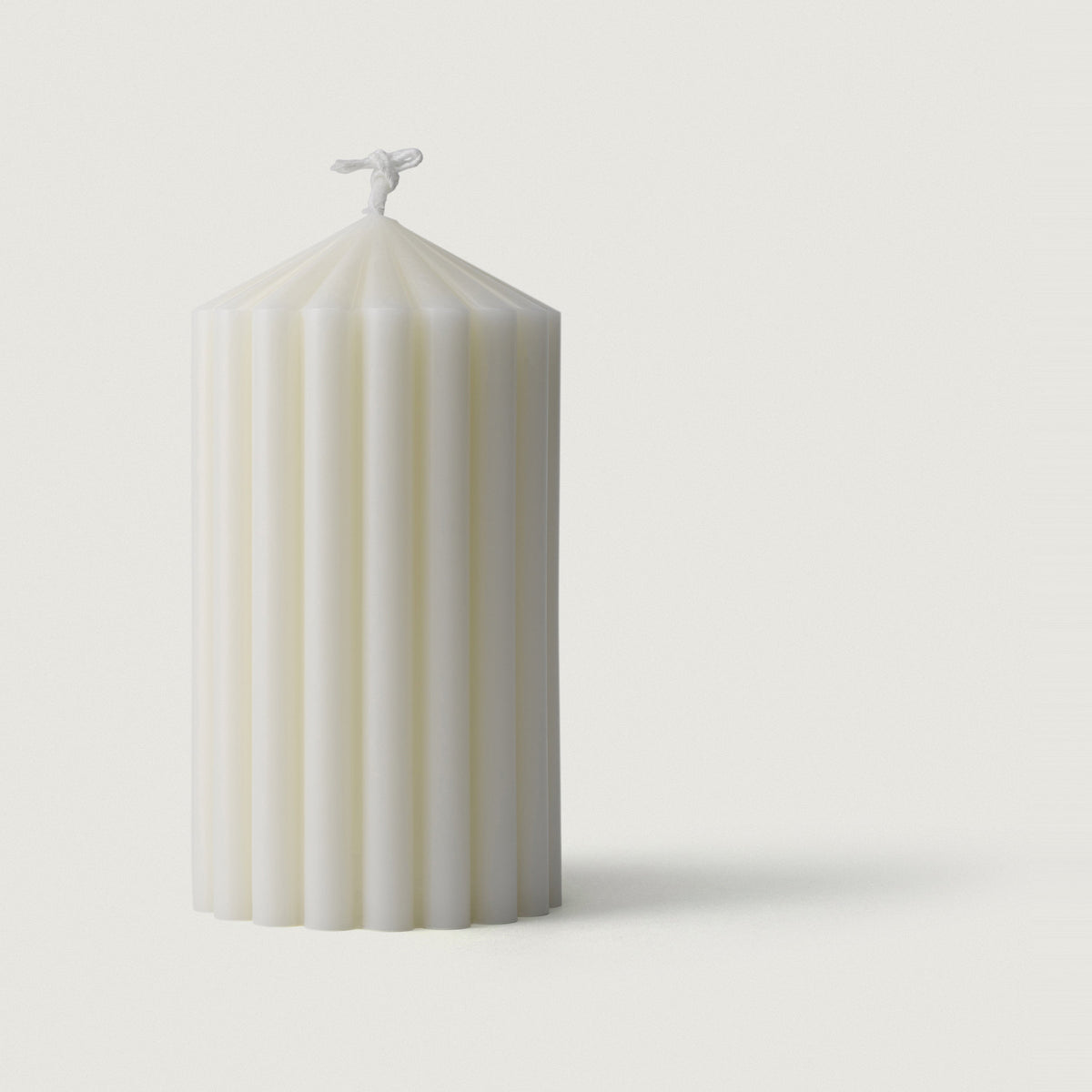
What to bring to a dinner party as a guest: what to do when the host says nothing, host gift ideas that create no extra work, and why a candle is one of the easiest to get right.